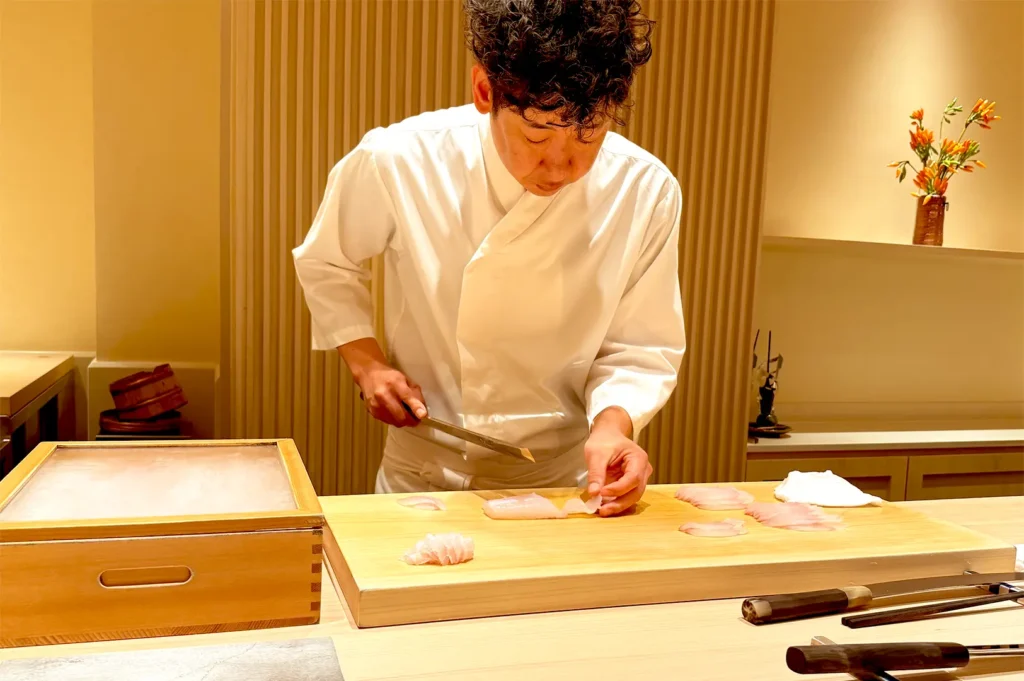
Sushi Sakuta is the sort of restaurant that makes you check your reservation twice. Partly because you do not want to arrive late, but mostly because dinner currently starts at S$580++ per person, before sake or any other drinks enter the picture.
That price immediately places it among Singapore’s most exclusive omakase restaurants. Still, after settling into the dining room and watching Chef Yoshio Sakuta work across the pale hinoki counter, I understood that this meal was not built around excess. It was built around detail, temperature and a deep respect for each piece of fish.
Sushi Sakuta at Millenia Walk: The New Space
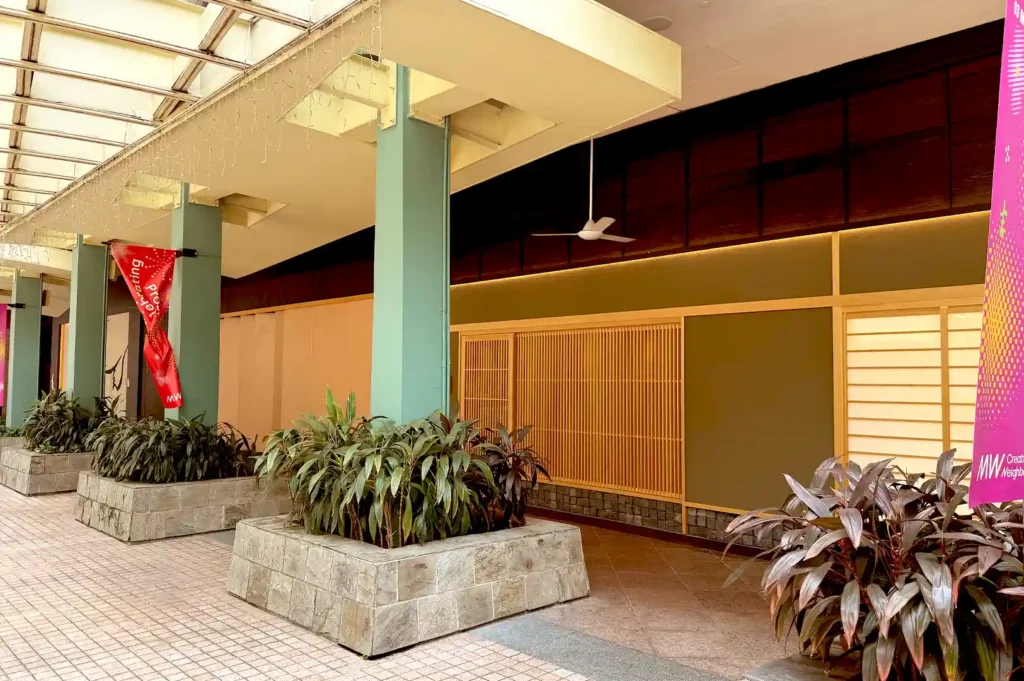
Sushi Sakuta Singapore is now located at Millenia Walk, #01-06/07/08, 9 Raffles Boulevard. Older articles may still point patrons towards The Capitol Kempinski Hotel Singapore, where the restaurant previously operated, but Chef Sakuta moved the restaurant into this new space in late 2025.
There is also a private room for guests, which makes sense for diners who want the same food and service without spending the evening shoulder to shoulder with strangers. Soft lighting, shoji-inspired details and carefully placed Japanese artwork give the room character.
Michelin-Starred Craft Without the Theatre
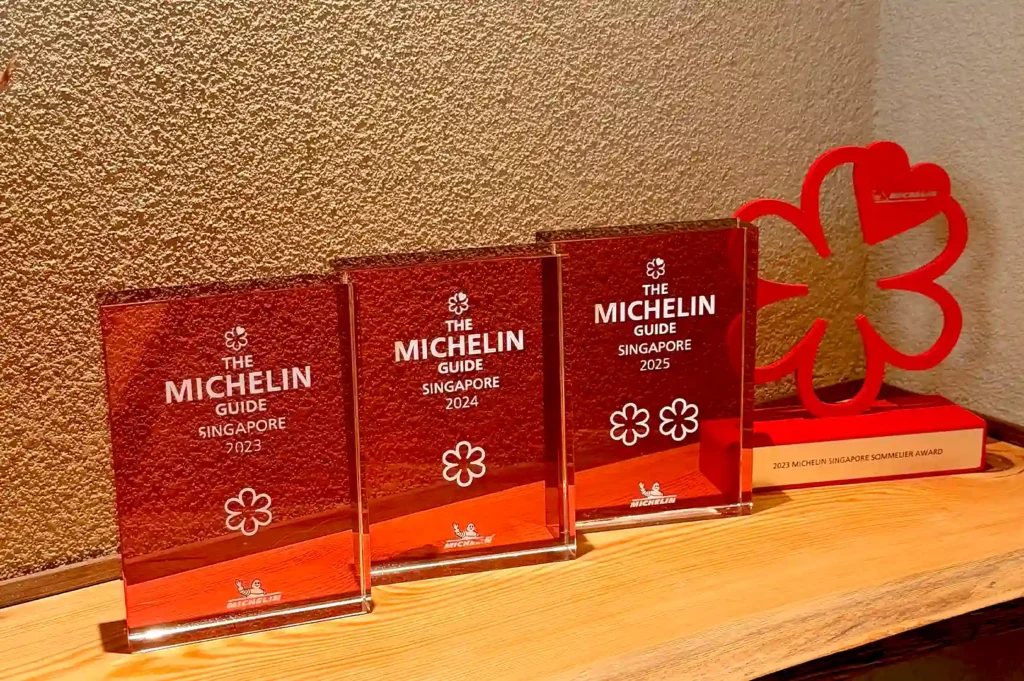
Sushi Sakuta received one Michelin star in 2023 and retained one-star recognition before being promoted to two Michelin stars in the 2025 Michelin Guide Singapore.
His approach pays tribute to Edomae-style sushi while allowing small adaptations based on the condition of each fish. Even seafood from the same species and origin can taste slightly different from one day to the next, and you can see that thinking in the way the meal progresses.
Chef Sakuta does not bury the food under explanations, but he gives guests enough context to understand why one bite is warmer, firmer or more heavily seasoned than another.
A Refined First Look at the Sushi Sakuta Menu
The menu experience here carries the discipline of a Tokyo sushi counter, but the elegant space and limited seating keep it personal.
With two stars from the Michelin Guide, the brand aims for refined precision, although the best moments are often the simplest ones: warm rice, carefully prepared fish and one delicious bite served close to perfection.
For a broader look at how sushi changes across formats, ingredients and levels of craftsmanship, explore our guide to Singapore’s wider sushi scene.
Female Snow Crab Chawanmushi
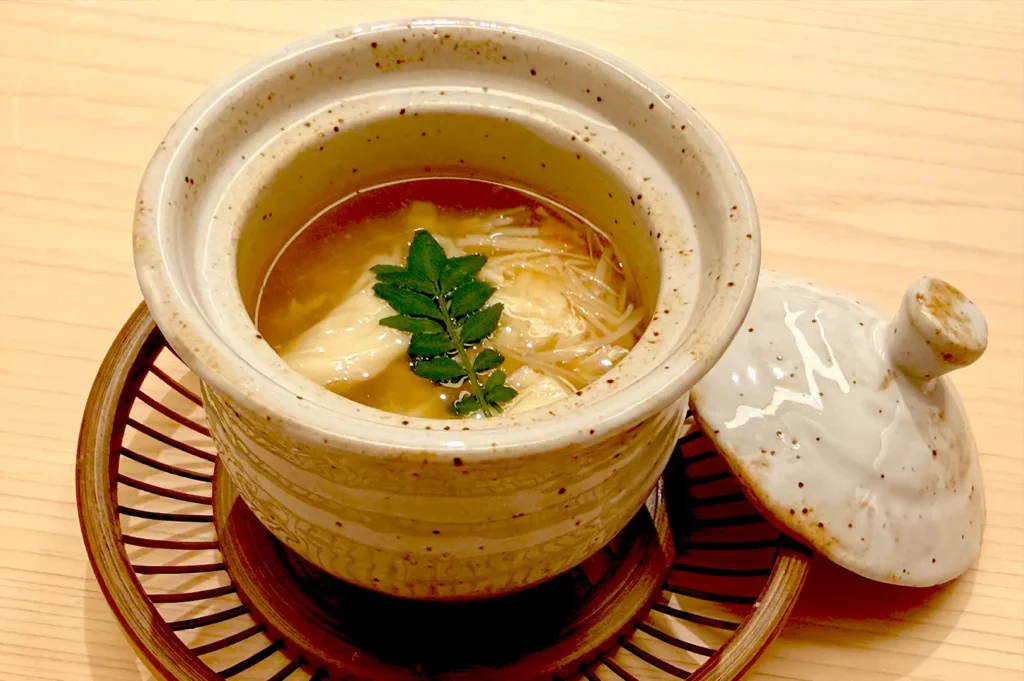
The meal began with chawanmushi topped with female snow crab and its roe. The steamed egg was soft and delicate, while the crab added sweetness, salinity and a gentle richness.
It was a comforting opening, but not a predictable one. The crab roe gave the dish enough character to prepare my palate for the more assertive seafood courses ahead.
Pine Flounder and Yuzu Kosho
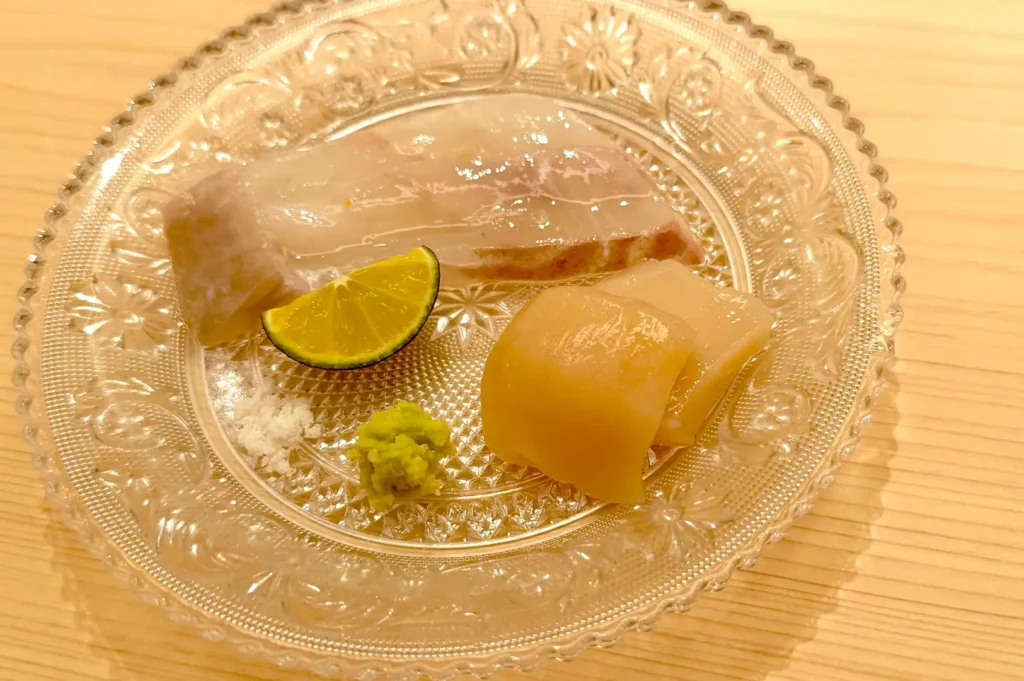
Pine flounder followed with a light seasoning of white soy. Its flavour was clean and restrained, offering a refreshing contrast before the richer dishes arrived.
Another fish course was served with yuzu vinegar and yuzu kosho. I added slightly too much yuzu kosho to my first bite and immediately pretended that had been my plan all along.
Monkfish Liver and Abalone Liver Sauce
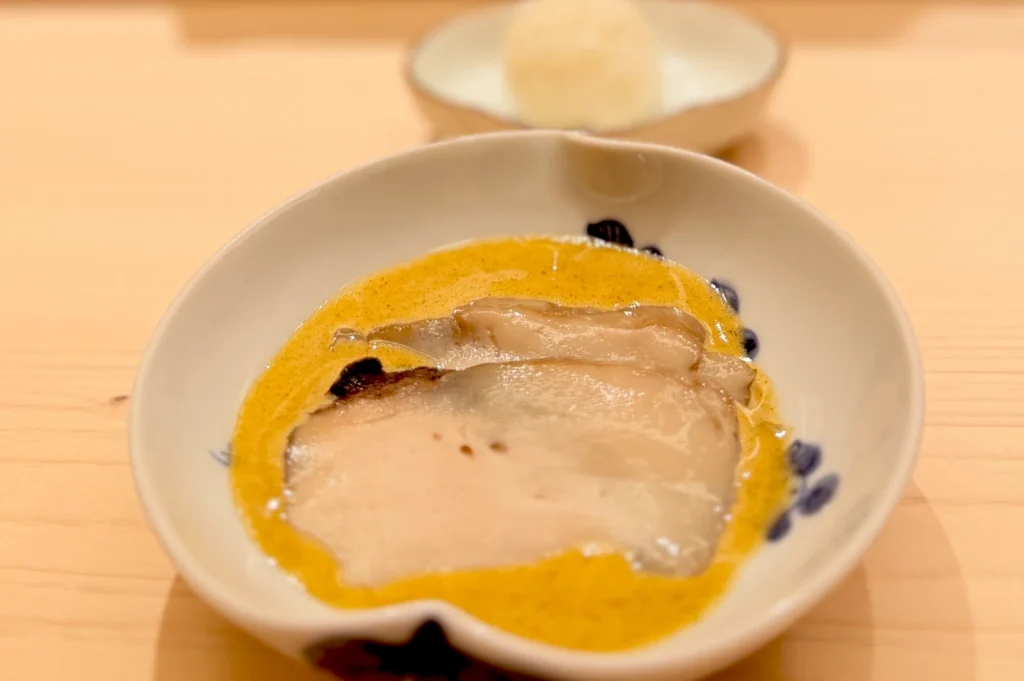
The meal became richer with the arrival of monkfish liver and abalone. Monkfish liver can sometimes feel heavy, but this serving was smooth, savoury and controlled.
The abalone had a firm, measured chew without becoming tough. It was paired with an abalone liver sauce that deepened its flavour while preserving the seafood’s natural sweetness.
This was one of the clearest examples of balance during the meal. Instead of allowing the sauce to dominate, Chef Sakuta used it to make the abalone taste more complete.
The Michelin Guide Details That Matters Most
Rice
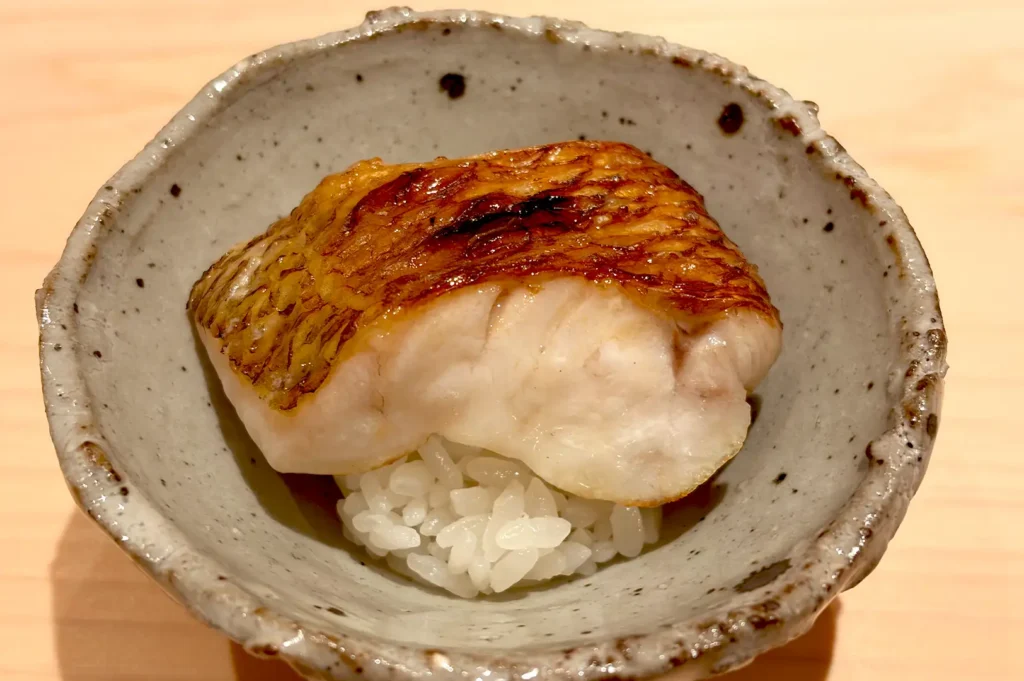
Fish naturally receives most of the attention at a sushi restaurant, but the rice revealed just as much about Chef Sakuta’s craft. Sushi Sakuta uses a blend of Hitomebore and Sasanishiki rice seasoned with red and white vinegar.
The temperature of the rice was also adjusted for different toppings. Yellowtail arrived on warmer rice, which brought forward its natural sweetness, while fatty tuna was served with rice closer to room temperature.
That difference may appear minor on paper, but it changed how each bite landed. The tuna remained rich without becoming overwhelming, and the yellowtail tasted fuller without requiring extra seasoning.
Seasoning
Fresh wasabi was applied with similar precision. A leatherjacket sushi course carried a slightly stronger amount, giving the fish a sharper and more energetic finish.
Other pieces used barely enough wasabi to register. The seasoning never felt identical from one piece to the next, which made the progression feel deliberate rather than repetitive.
How the Fish Moved from Bright to Rich
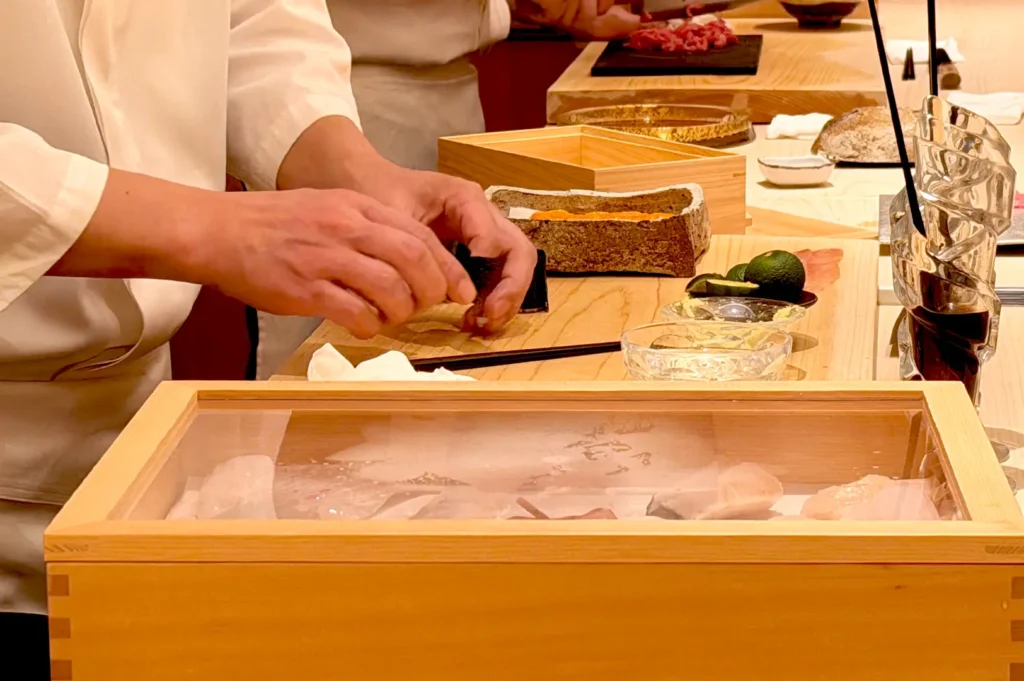
The fish courses gradually shifted from cleaner flavours to richer, more indulgent bites:
- Spanish mackerel: One of my favourite pieces of the evening. It had a lively flavour that refreshed the palate between heavier courses.
- Bonito and horse mackerel: Both had enough character to stand on their own rather than feeling like supporting pieces between more expensive ingredients.
- Fatty tuna: Served over carefully tempered rice, it was rich without coating the mouth for too long.
- Torotaku hand roll: Minced tuna was paired with pickled radish, whose acidity and crunch kept the bite satisfying rather than heavy.
- Uni: Sweet and creamy, but portioned carefully enough to avoid becoming excessive.
- Japanese tiger prawn: Firm, plump and unexpectedly crisp, offering a different texture from the softer fish courses.
Together, these dishes showed that Sushi Sakuta is not simply a restaurant in Singapore specializing in premium seafood. The real craft lies in knowing what each ingredient needs, and when to leave it alone.
Why the Room Makes the Meal Feel More Personal
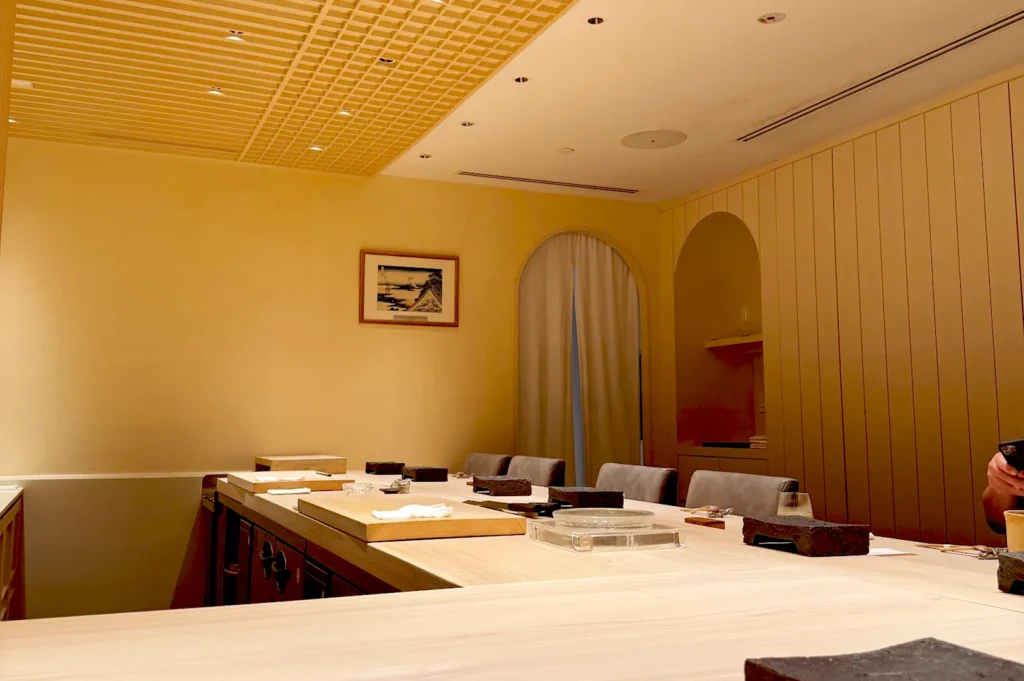
Sushi Sakuta’s location inside Millenia Walk feels surprisingly removed from the activity outside. Once I stepped into the restaurant, the restrained interior, and soft lighting made it easier to focus on the food.
The service followed the same measured approach. Plates were cleared promptly, sake arrived at the right moment, and the team explained unfamiliar ingredients without turning the meal into a formal lesson.
I also appreciated that no one tried to force conversation across the counter. The team gave guests room to watch, ask questions and enjoy each course at their own pace, which made the experience feel refined without becoming stiff.
Dining Rules
- No outside bottles allowed; no corkage service.
- Avoid heavy perfume to preserve sushi flavors and guest experience.
- Attentive, unobtrusive service with precise timing for plate clearing and sake pouring.
- Polished yet comfortable atmosphere allowing guests to focus on the chef’s preparation while welcoming questions.
A Serious Omakase for Serious Sushi Diners
Let me be clear, S$580++ for dinner is a major commitment. This is not the omakase restaurant I would casually recommend for a spontaneous Tuesday dinner, unless your spontaneous Tuesdays are considerably more glamorous than mine.
The S$350++ lunch is the more approachable introduction, available on Wednesday, Friday, Saturday and Sunday, as well as Tuesday.
Sushi Sakuta will appeal most to diners who notice rice temperature, seafood seasonality, and the smaller decisions behind Edomae-style sushi. With Chef Yoshio Sakuta leading the kitchen and Head Sommelier Iwabuchi Makoto shaping the beverage experience, it feels close to the pinnacle of refined omakase without relying on unnecessary showmanship.
