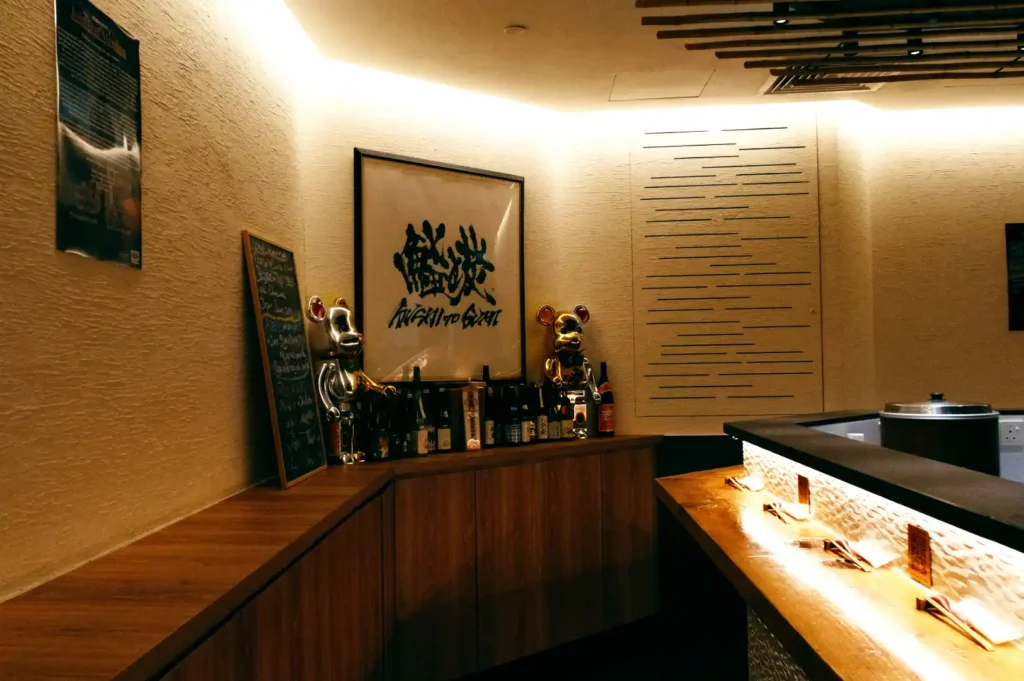
There is something slightly strange about arriving at a sushi restaurant and realising that the first thing you need to find is not a table, but a place to stand. At Sushi To Sumi in Raffles Place, that feeling is part of the point. The restaurant takes the idea of a Japanese tachigui sushi bar, where diners eat standing at the counter, and places it in the middle of Singapore’s CBD, where lunch breaks already have their own strict sense of timing.
But the standing format is not actually the most interesting thing about Sushi To Sumi. What caught my attention was the way the restaurant approaches its menu. Instead of deciding what sushi it wants to serve and then finding the ingredients to match, the process works in the opposite direction: the fish comes first, and the menu follows.
The Ocean Writes the Menu
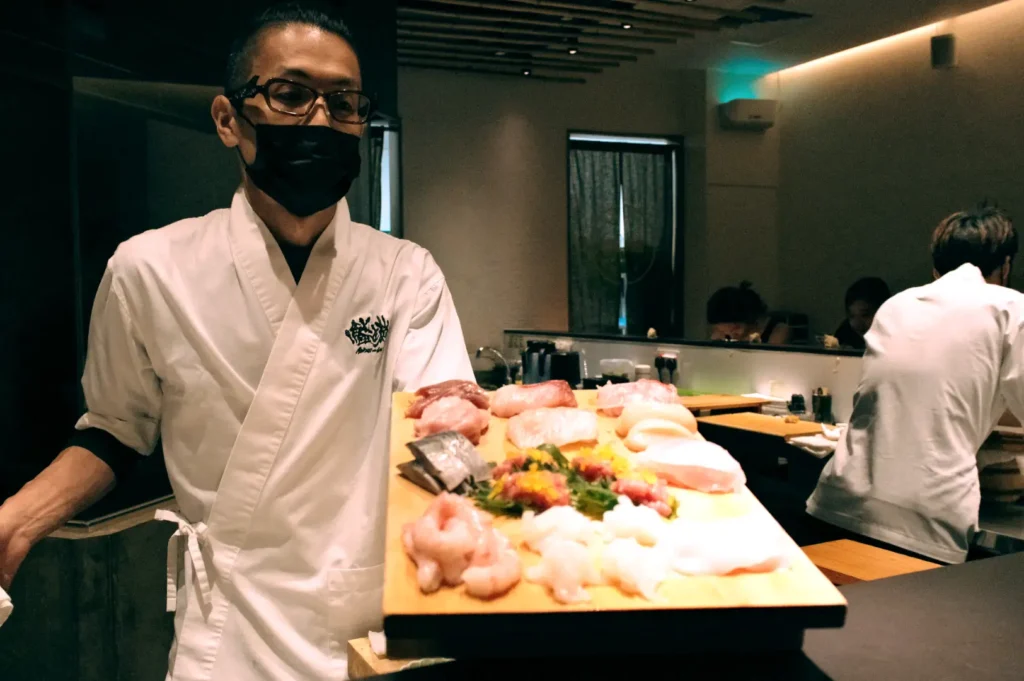
Most restaurant menus give you a reassuring sense of permanence. You find your favourite dish, order it again a few weeks later and expect it to taste roughly the same. Sushi To Sumi works differently because its selection changes according to what is running in Japan and what the chef considers worth serving that day.
That approach can be slightly inconvenient if you arrive with one particular fish in mind, but I think that is also what makes the experience more interesting. You are not simply choosing from a fixed catalogue of sushi. You are responding to what the ocean is offering at that moment, which means one visit can look noticeably different from the next.
The chef has the final say over how the fish is presented. Something that suits nigiri will be shaped over rice, while another ingredient might make more sense as sashimi or over binchotan charcoal. The format follows the ingredient rather than forcing the ingredient into a predetermined format.
A Fishmonger’s Influence Behind the Counter
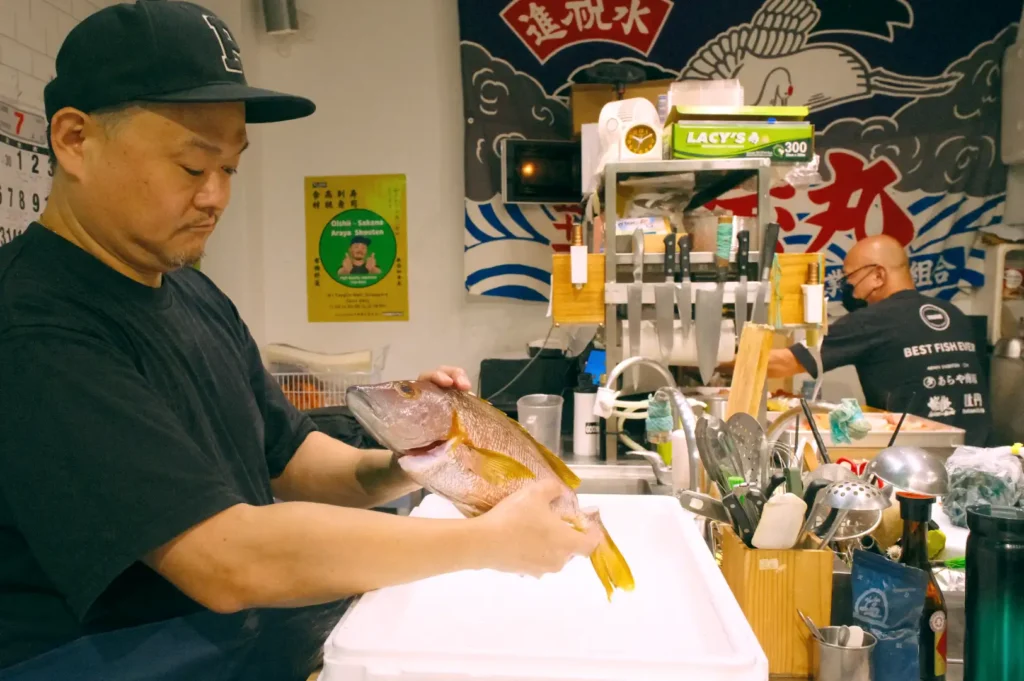
That philosophy makes more sense once you understand where Sushi To Sumi comes from. The restaurant was founded by Araya-san, the Hokkaido-born fishmonger behind Araya Shouten, whose family connection to fishing stretches back to his grandfather, a commercial fisherman from Kushiro. Before Sushi To Sumi existed, his working life already revolved around understanding where Japanese seafood came from, how it was handled and when it was at its best.
Sushi To Sumi is essentially where that knowledge becomes something diners can experience directly. The restaurant is not simply buying fish because a particular species happens to be fashionable that month. There is a much more fundamental question behind the menu: what has arrived, what is good and what is the best way to eat it?
That is also why the restaurant’s seasonal approach feels more convincing than simply putting the word “seasonal” on a menu. The changes are practical. When the catch changes, the sushi changes with it, and the chef has the freedom to decide what deserves to be served raw, pressed over rice or cooked over charcoal.
When the Chef Lets the Fish Decide
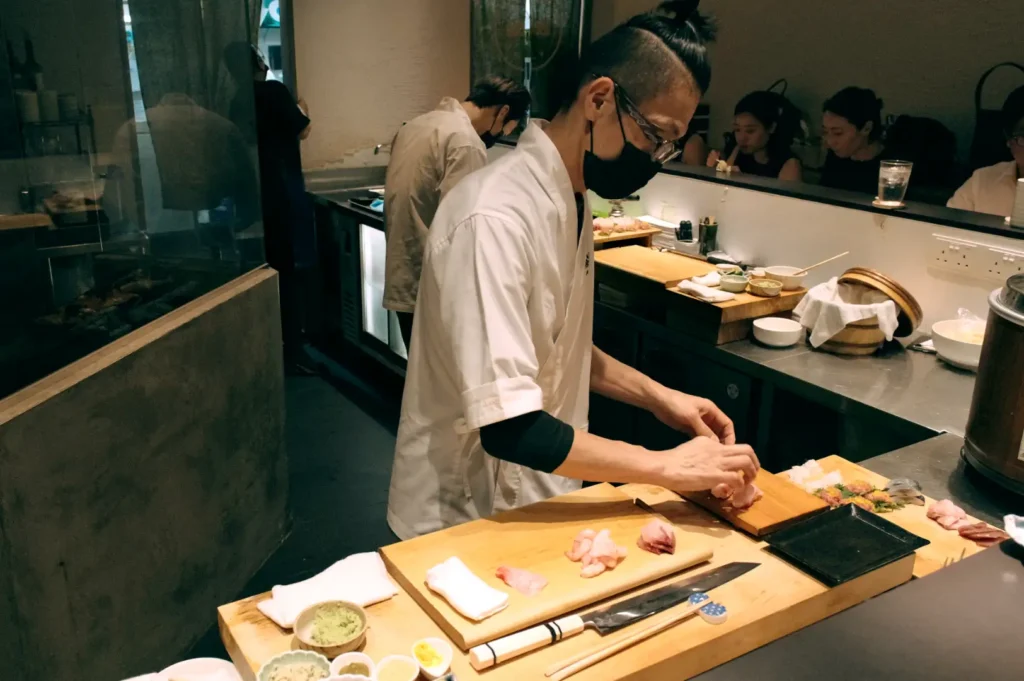
I like the idea of giving the chef that freedom because sushi can become overly predictable when every Japanese sushi restaurant Singapore has is working from the same familiar list. Tuna, salmon and other popular fish will always have their place, but part of the appeal of Japanese seafood is discovering species that you might not normally order for yourself.
At Sushi To Sumi, seasonal rarities can make their way onto the counter when conditions allow. Gimpo, which Araya-san considers one of the standout items, and Nishin, one of his personal favourites for nigiri, are examples of the kind of seafood that makes the changing menu worth paying attention to. Gindara has also moved from something the restaurant once considered too expensive for its menu to something diners can encounter when the circumstances make it possible.
These are not ingredients that need a long explanation once they arrive in front of you. A good piece of fish has a way of making the point itself. What matters is that the restaurant is willing to let those ingredients temporarily replace the usual suspects when the season gives them a reason to.
Sushi and Charcoal Belong Together Here
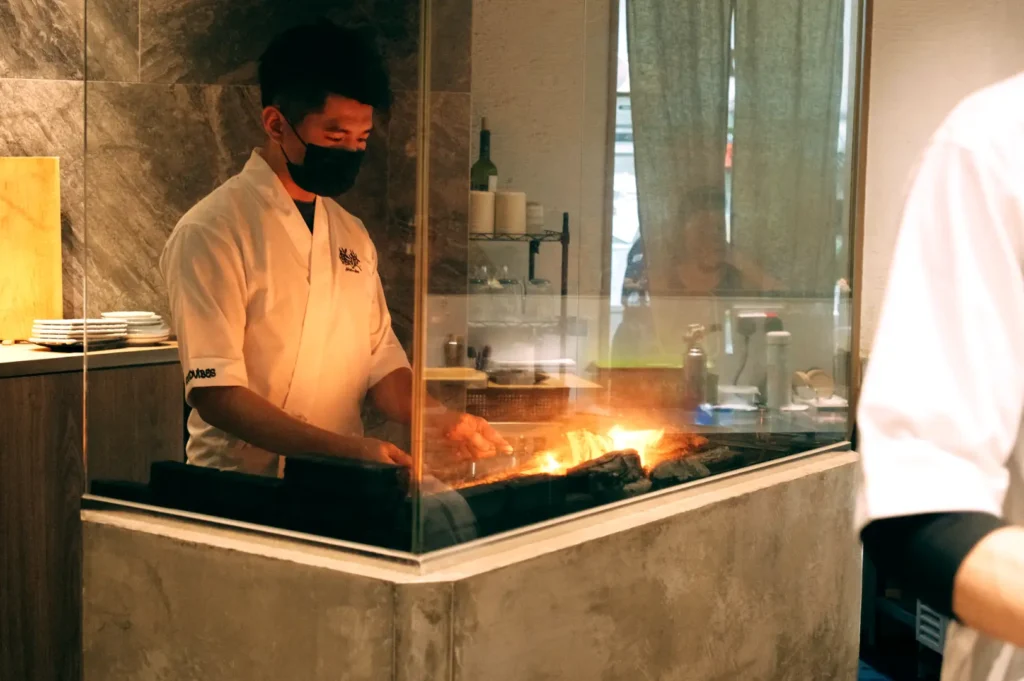
There is another side to Sushi To Sumi that becomes more apparent once you stop thinking of it as simply a standing sushi counter. The name itself refers to sushi and charcoal, and the latter is represented by genuine Japanese binchotan used for grilled and aburi preparations.
It changes the rhythm of the meal. One moment you are looking at a delicate piece of nigiri, and the next there is the smell of charcoal coming from the grill as seafood is cooked over clean, intense heat. The contrast makes sense because the restaurant is not trying to force every ingredient into the same style of preparation.
It also reflects the philosophy behind the menu. The fish gets to determine the treatment, rather than the restaurant deciding in advance that everything must be raw, grilled or pressed into sushi. For diners, that makes the experience feel less like following a script and more like seeing what the day has brought in.
The Standing Counter Changes the Experience
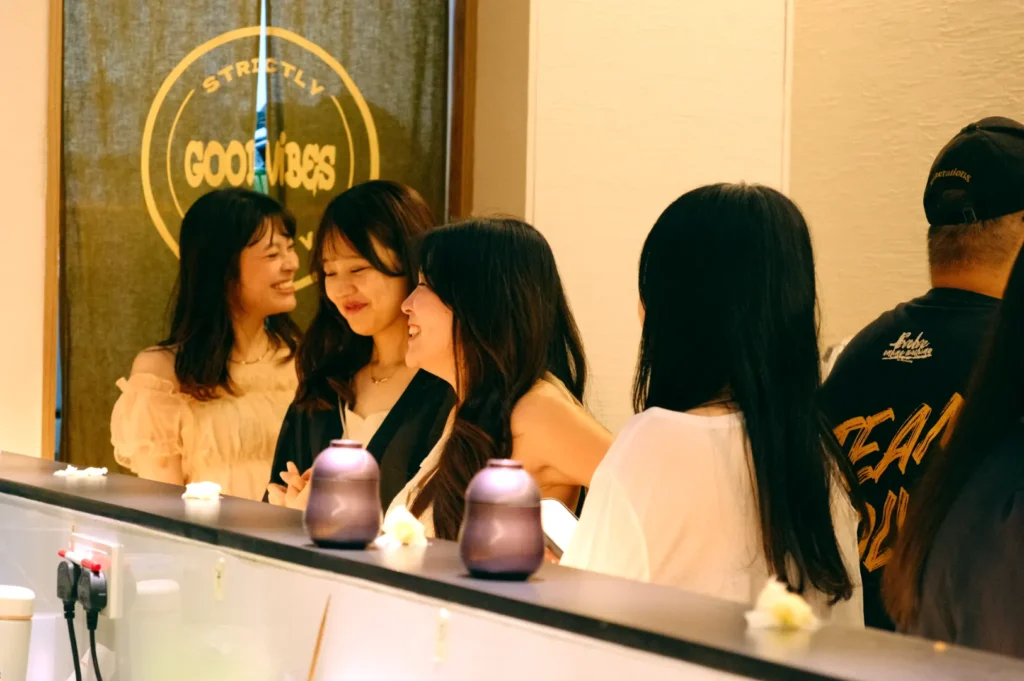
Of course, you cannot review Sushi To Sumi without talking about the fact that you are standing for lunch. The restaurant is currently positioned as Singapore’s only standing sushi bar, drawing on tachigui culture in Japan, where sushi was historically eaten as quick, everyday food rather than the long ceremonial meal many people associate with premium sushi today.
At first, standing can sound like a compromise. After a few pieces, however, the logic becomes clearer, particularly if you are there during a working lunch. The counter keeps the experience focused: the chef is directly in front of you, the sushi arrives as it is prepared and the meal can be finished within roughly 30 to 45 minutes.
I can also see why the format works particularly well for solo diners. There is no awkwardness to sitting alone at a large table, and no expectation that lunch needs to become a social occasion. You can simply stand at the counter, eat good sushi and get on with the rest of your day.
The Fisherman’s Table in the CBD
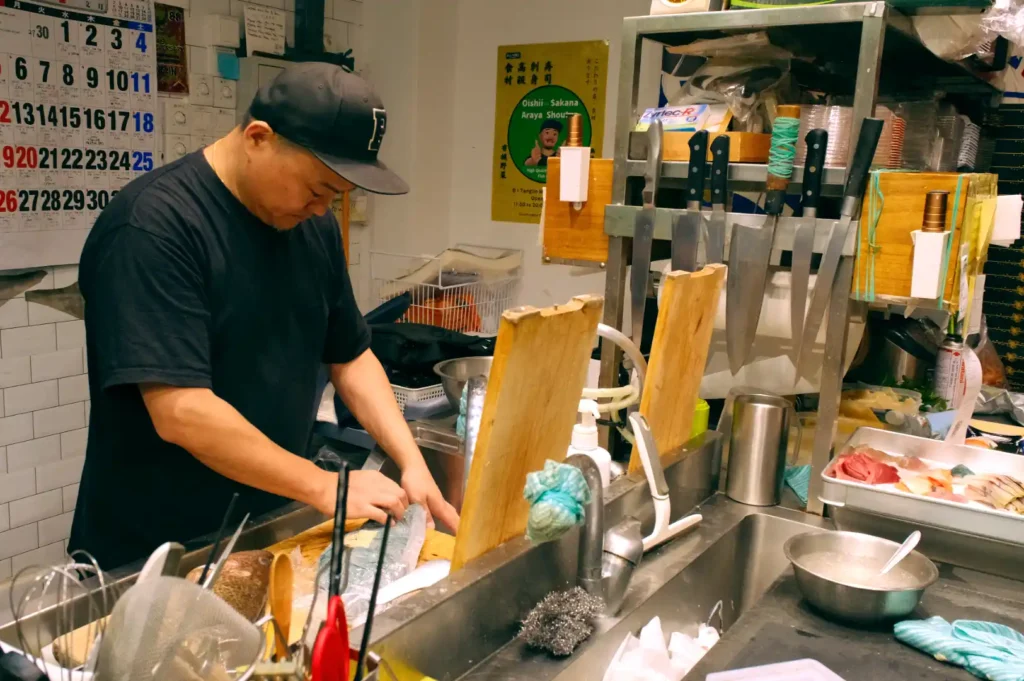
That is perhaps the best way to understand what Sushi To Sumi is trying to do. Araya-san already had access to the kind of Japanese seafood normally associated with high-end sushi restaurants through his fishmonger business, but supplying that fish to other restaurants meant there was always a distance between the person sourcing it and the person eating it.
Sushi To Sumi closes some of that distance. The fishmonger’s knowledge, the chef’s judgement and the diner’s plate all sit much closer together, creating something that feels like a fisherman’s table adapted for the modern CBD. You do not need to know the name of every species or understand the entire Japanese seafood trade to appreciate it.
What you need to notice is whether the fish tastes like it was worth serving that day. When the menu changes with the catch, that becomes the most important question.
A Sushi Restaurant That Does Not Stand Still
The more I think about Sushi To Sumi, the more I feel that its most interesting feature is not the lack of chairs. The standing counter is certainly memorable, but the deeper idea is that the restaurant refuses to treat sushi as something that should remain exactly the same from one visit to the next.
The ocean does not work that way. Fish comes into season, disappears, returns and changes depending on where it is caught and how it is handled. By allowing the day’s ingredients to shape the menu, Sushi To Sumi acknowledges that reality instead of pretending a fixed list can tell the whole story.
For a restaurant in the middle of Raffles Place, that feels surprisingly appropriate. The city may run on schedules, meetings and lunch appointments, but the fish does not care about any of them. At Sushi To Sumi, the clock determines how long you have to eat, but the ocean still gets to decide what is on the counter.
