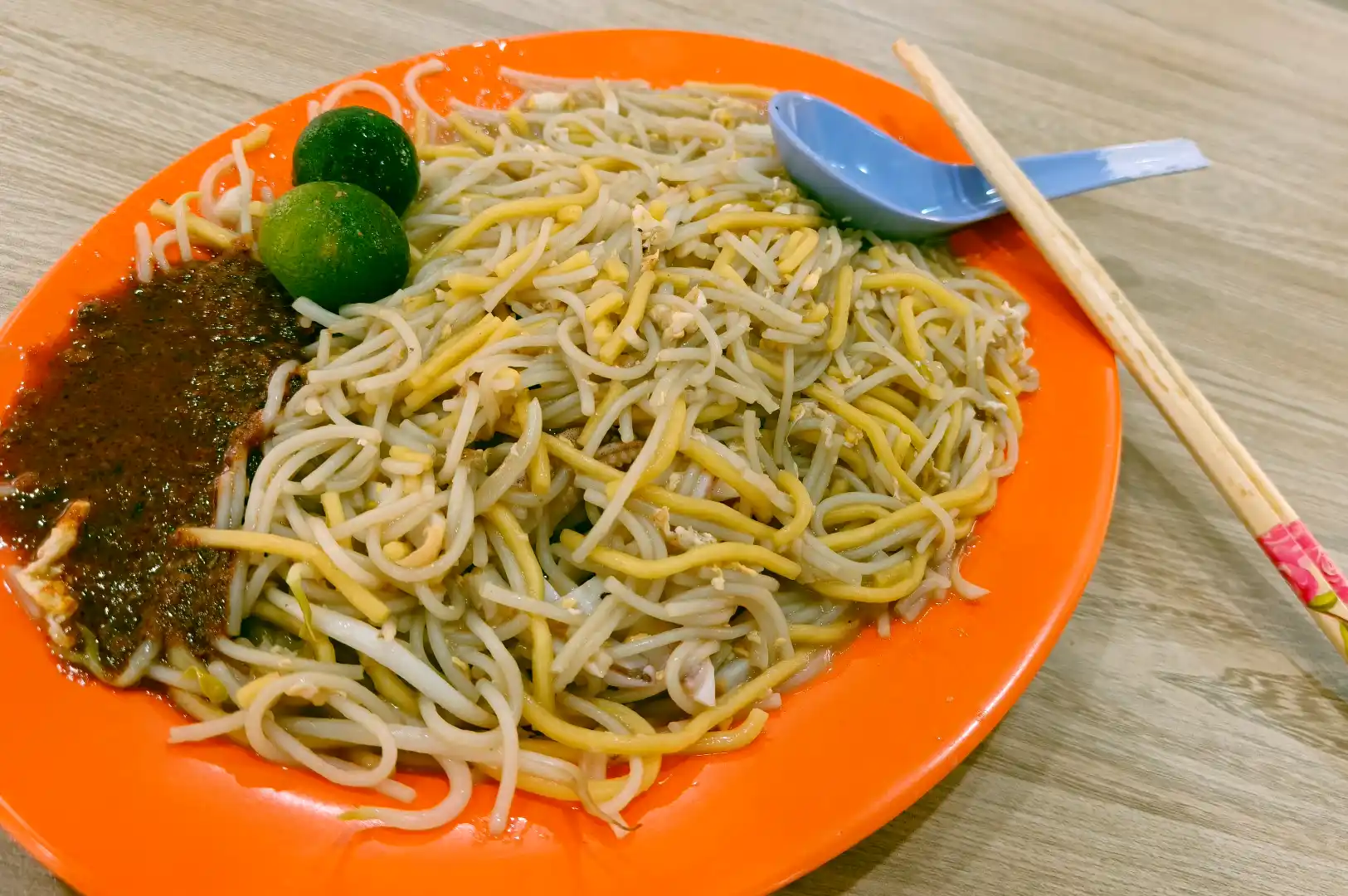
I’ve always believed you can tell a lot about a hawker by watching how they handle a wok of Hokkien mee. Personally, I like my yellow noodles and thin beehoon somewhere between soft and al dente, with enough prawn flavour to make every mouthful delicious. It’s a little like cooking pasta, except the stock does much more of the work. The sweetness should come naturally from the prawns and seafood, rather than relying on sugar or excessive seasoning.
Of course, everyone has their preferences. Some look for smoky wok hei, others want crispy pork lard, and a few would argue that the sambal chilli matters just as much as the noodles.
With that in mind, here are some of the best Hokkien mee stalls in Singapore, each with its own approach to this hawker favourite.
Finding Your Own Best Hokkien Mee
- Hong Heng Fried Sotong Prawn Mee (Tiong Bahru Market)
- Nam Sing Hokkien Fried Mee (Old Airport Road Food Centre)
- Swee Guan Hokkien Mee (Geylang Lor 29)
- Singapore Fried Hokkien Mee (Whampoa Makan Place)
- Come Daily Fried Hokkien Prawn Mee (Toa Payoh West Market & Food Centre)
- Hokkien Man Hokkien Mee (Kim Keat Palm, Toa Payoh)
1. Hong Heng Fried Sotong Prawn Mee (Tiong Bahru Market)
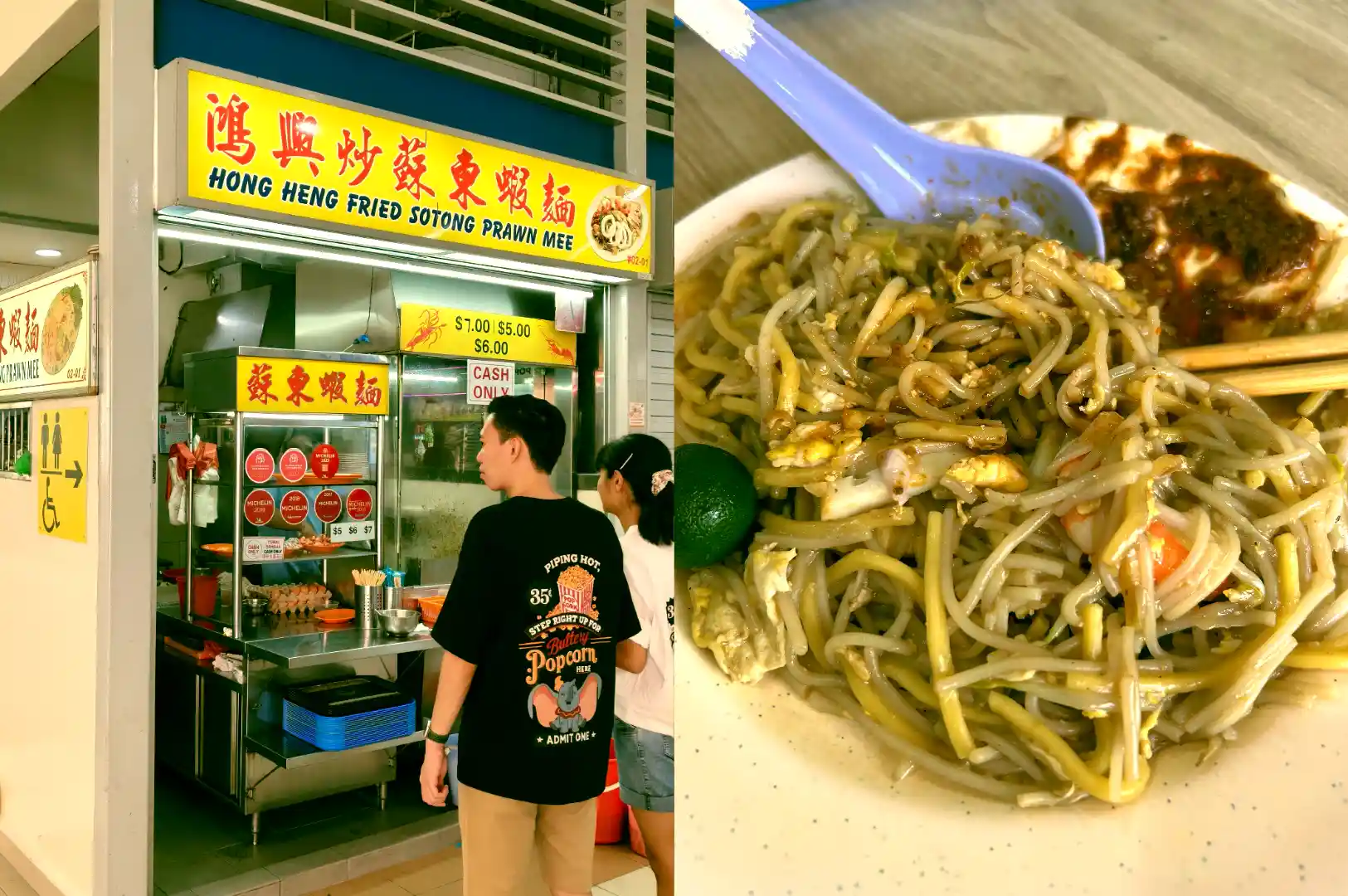
Not many hawker stalls can claim a decade of Michelin recognition, but Hong Heng Fried Sotong Prawn Mee has maintained its Bib Gourmand distinction across every Singapore edition from 2016 to 2026. Located on the second floor of Tiong Bahru Market, the stall specialises in fried Hokkien prawn mee, cooked fresh to order.
Each plate combines noodles with sliced fish, squid and prawns, accompanied by homemade chilli sauce. The noodles retain some moisture, allowing the savoury seafood broth to coat the strands without leaving too much gravy behind. The squid adds a pleasant chewiness that contrasts nicely with the softer noodles.
Where Opinions Matter
Ten editions of Michelin recognition certainly raise expectations, but I wouldn’t assume everyone will agree on the results. Hong Heng’s seasoning leans towards the milder side, which may appeal to those who enjoy tasting the seafood broth without too much smokiness. However, anyone looking for intense wok hei might find it a little underwhelming.
I’d recommend trying the homemade chilli with a squeeze of lime to bring out the seafood flavours. The portion of prawns and squid may also seem modest for those who prefer generous toppings, although the combination of noodles and broth remains the main attraction.
When and Where
- Where: 30 Seng Poh Road, #02-01, Tiong Bahru Market, Singapore 168898
- When to go: Tuesday to Saturday, 10:30am to 2:30pm. Closed Sunday and Monday.
2. Nam Sing Hokkien Fried Mee (Old Airport Road Food Centre)
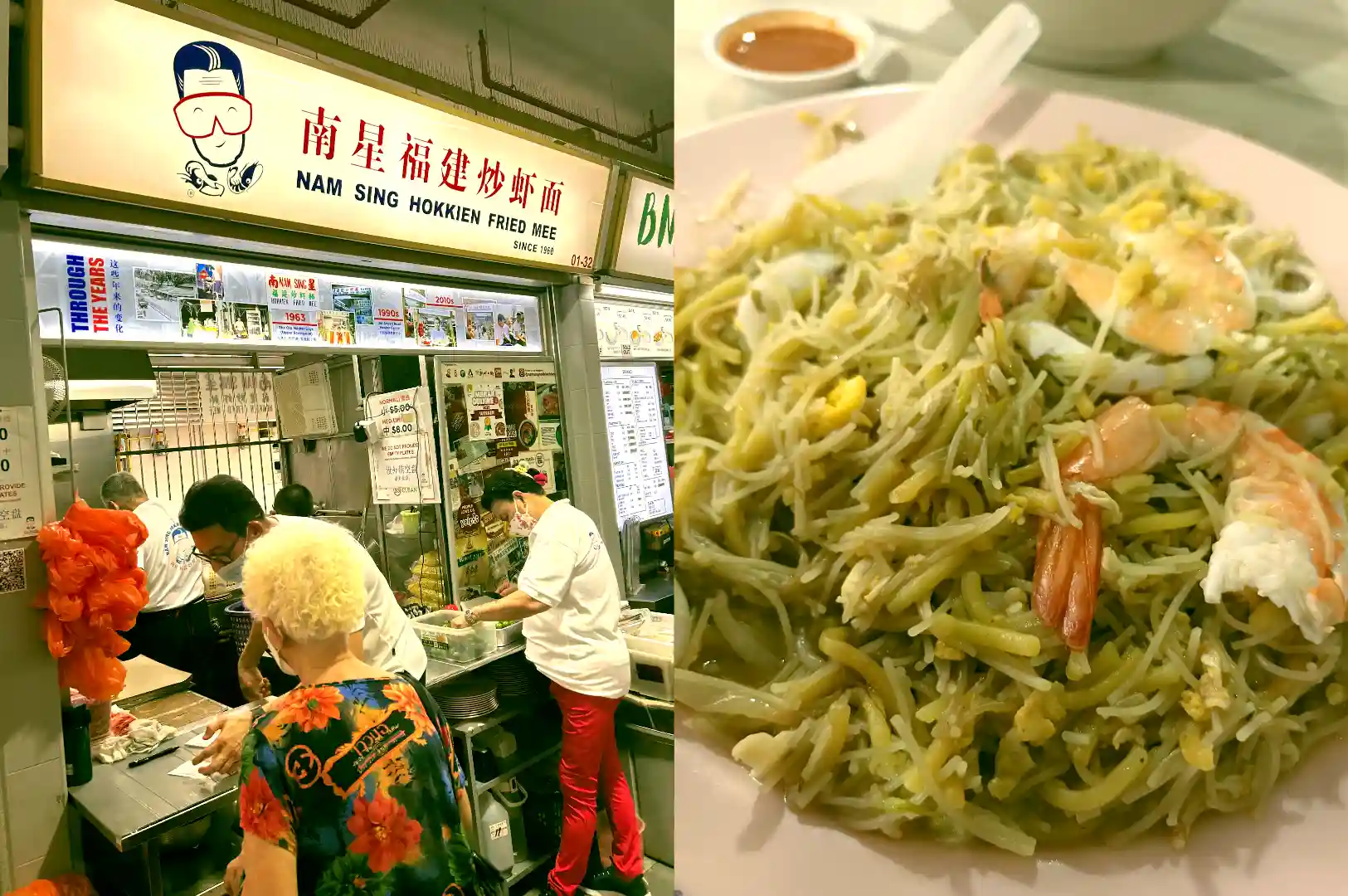
At Nam Sing Hokkien Fried Mee, the noodles take priority over the gravy. Operating since 1960, this Old Airport Road Food Centre stall specialises in fried Hokkien noodles with prawns, prepared in a distinctly drier style.
Its yellow noodles and bee hoon are fried in a stock made from prawn shells and tomalley until most of the liquid is absorbed. The result is a plate with concentrated prawn flavour and separate noodle strands, rather than the saucier consistency found at many other Hokkien mee stalls.
Where Opinions May Differ
Nam Sing’s cooking technique brings out the seasoning and wok hei without relying on much gravy. Personally, I appreciate how the prawn flavour comes through, although I can see why someone who enjoys wetter Hokkien mee might find this version a little lacking in moisture.
The portions may also seem small for the price, especially if you’re arriving particularly hungry. I’d suggest trying the noodles before adding chilli, as they traditionally serves cut chilli instead of the usual sambal belacan.
When and Where
- Where: 51 Old Airport Road, #01-32, Old Airport Road Food Centre
- When to go: Tuesday and Thursday to Sunday, 10am to 4:30pm. Closed Monday and Wednesday.
3. Swee Guan Hokkien Mee (Geylang Lor 29)
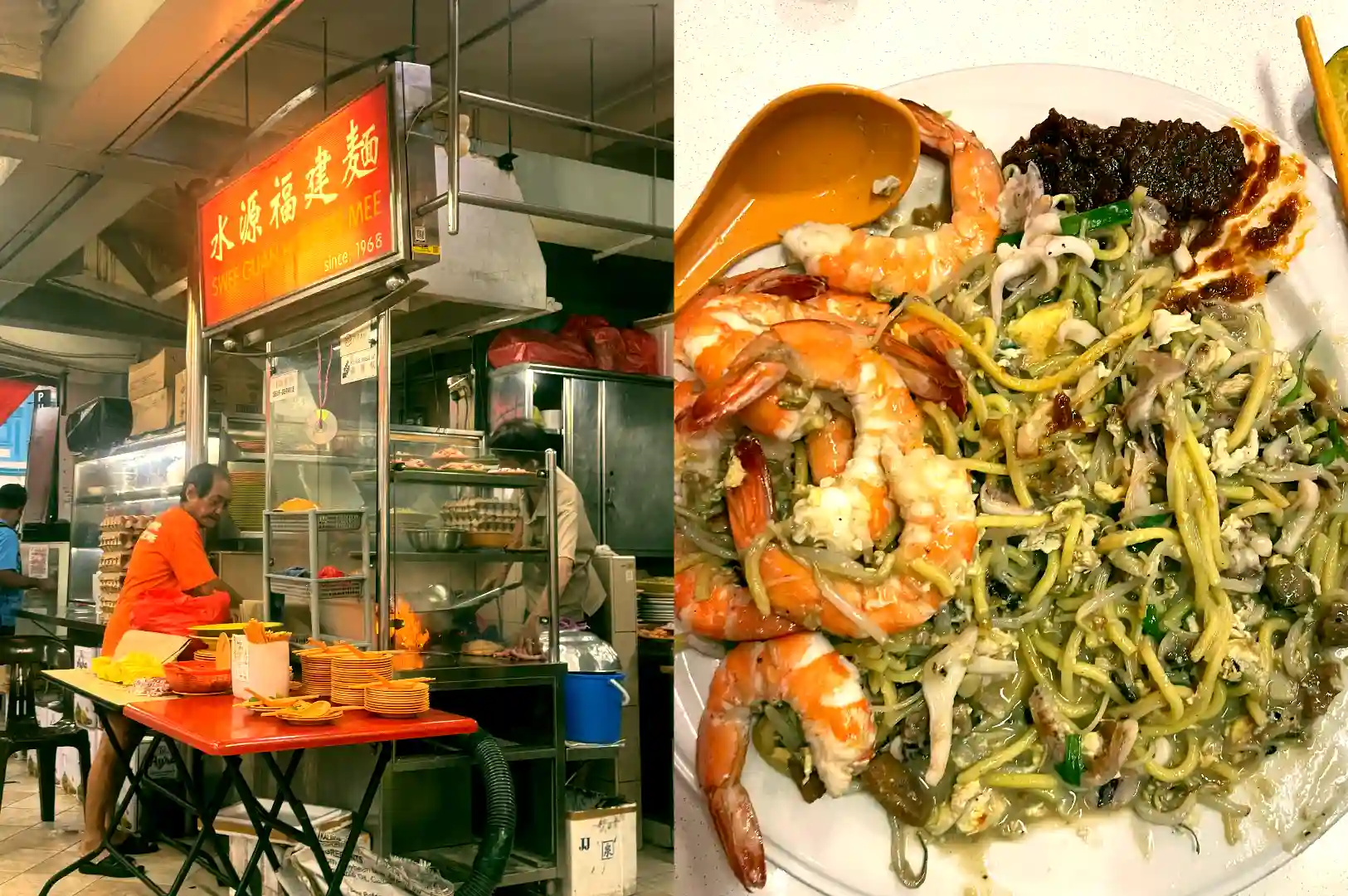
Charcoal cooking has become less common among Singapore’s hawker stalls, but Swee Guan Hokkien Mee continues the tradition at Geylang Lorong 29. Located within Sing Lian Eating House, the stall prepares its fried Hokkien mee over charcoal fire, using pork-bone stock that has been simmered for several hours.
The charcoal cooking gives the noodles a smoky character, while the stock contributes a rich, savoury flavour. Swee Guan also offers different prawn sizes, with larger seafood options available at higher prices. It’s an interesting choice for those who appreciate how traditional cooking methods influence the finished dish.
Where Opinions Matter
I’ve always found charcoal cooking interesting because the intensity of the fire can influence how the noodles absorb the stock and develop their wok hei. Still, using charcoal doesn’t automatically guarantee a stronger smoky flavour, and some may find the difference less noticeable than expected.
Price is another consideration. With portions starting around S$8 and premium prawn options costing considerably more, Swee Guan isn’t the cheapest option for a Hokkien mee, at least thats my opinion. I’d suggest checking the prawn sizes and prices before ordering, especially if you’re visiting for the first time.
When and Where
- Where: Sing Lian Eating House, 549 Geylang Road, near Lorong 29, Singapore 389504
- When to go: Definitely drop by the evenings. Since upon checking, their operating hours do vary, so checking the latest schedule and closure days would be best before visiting.
4. Singapore Fried Hokkien Mee (Whampoa Makan Place)
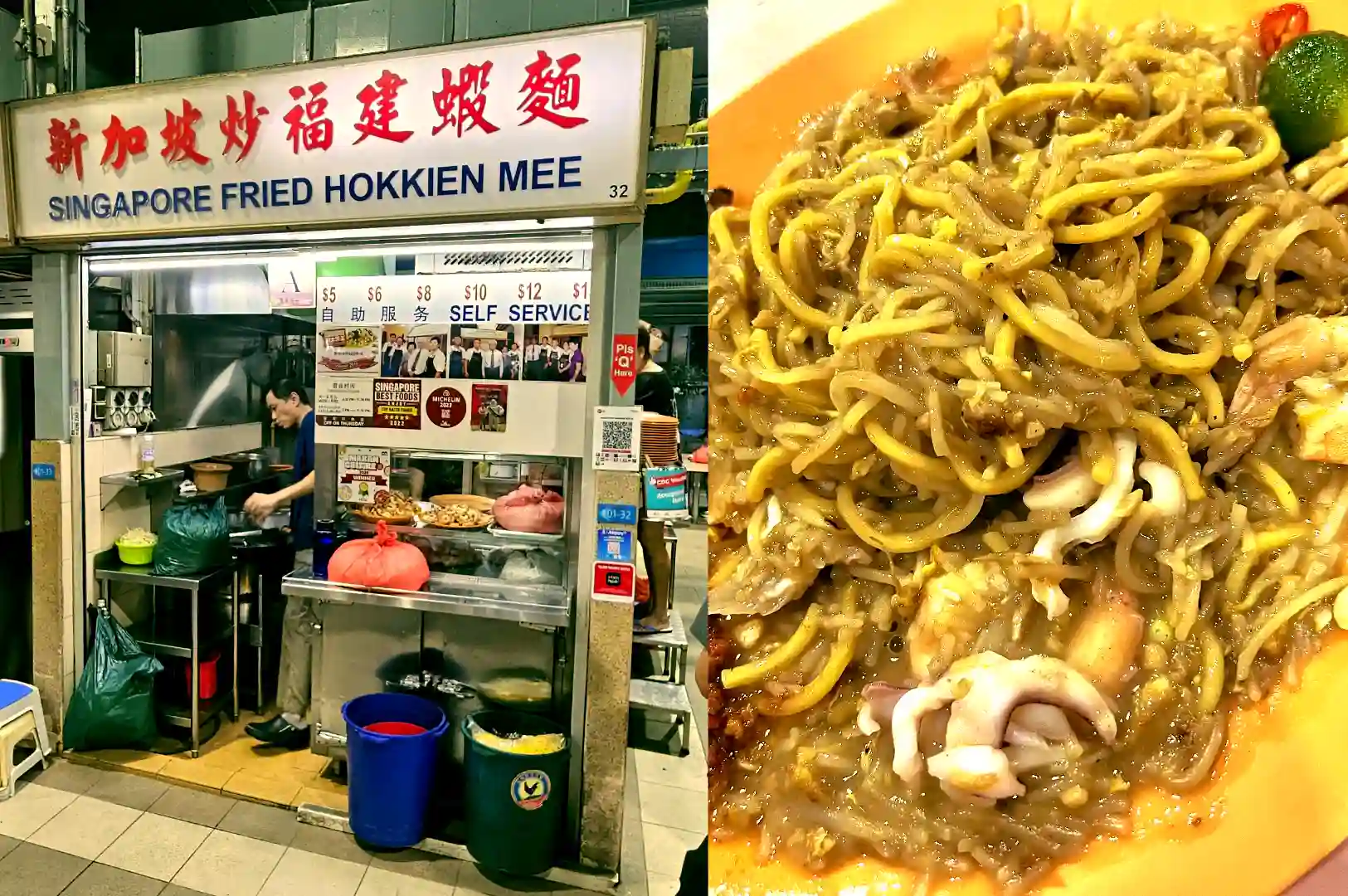
While many Hokkien mee stalls finish serving by the afternoon, Singapore Fried Hokkien Mee at Whampoa Makan Place keeps its wok going until 11:30pm. Featured in the Michelin selection, this hawker stall is an option for those craving fried Hokkien prawn mee well into the evening.
The dish combines yellow egg noodles and bee hoon, stir-fried with prawns and squid in a savoury seafood broth. Its wetter consistency leaves some gravy coating the noodles, alongside the smoky aroma of wok hei. It’s a style that particularly appeals to those who enjoy their Hokkien mee with a little extra sauce.
Where Opinions Matter
I’ve always leaned towards Hokkien mee with a bit of gravy, but I think the trick is having just enough broth to coat the noodles without making everything too soft. Personally, I’d also want a squeeze of lime juice to cut through some of that richness. A little acidity can make a difference, especially with seafood-based dishes.
My one reservation would be the portion sizes, particularly for anyone expecting plenty of prawns and squid. I’d also ask about adding fried pork lard for some extra crunch, although availability isn’t guaranteed. And with its evening hours, I wouldn’t be surprised to encounter a queue around dinnertime.
When and Where
- Where: #01-32/33, Whampoa Makan Place, 90/91 Whampoa Drive, Singapore
- When to go: Monday to Wednesday and Friday, 3:30pm to 11:30pm. Saturday and Sunday, 2pm to 11:30pm. Closed Thursday.
5. Come Daily Fried Hokkien Prawn Mee (Toa Payoh West Market & Food Centre)
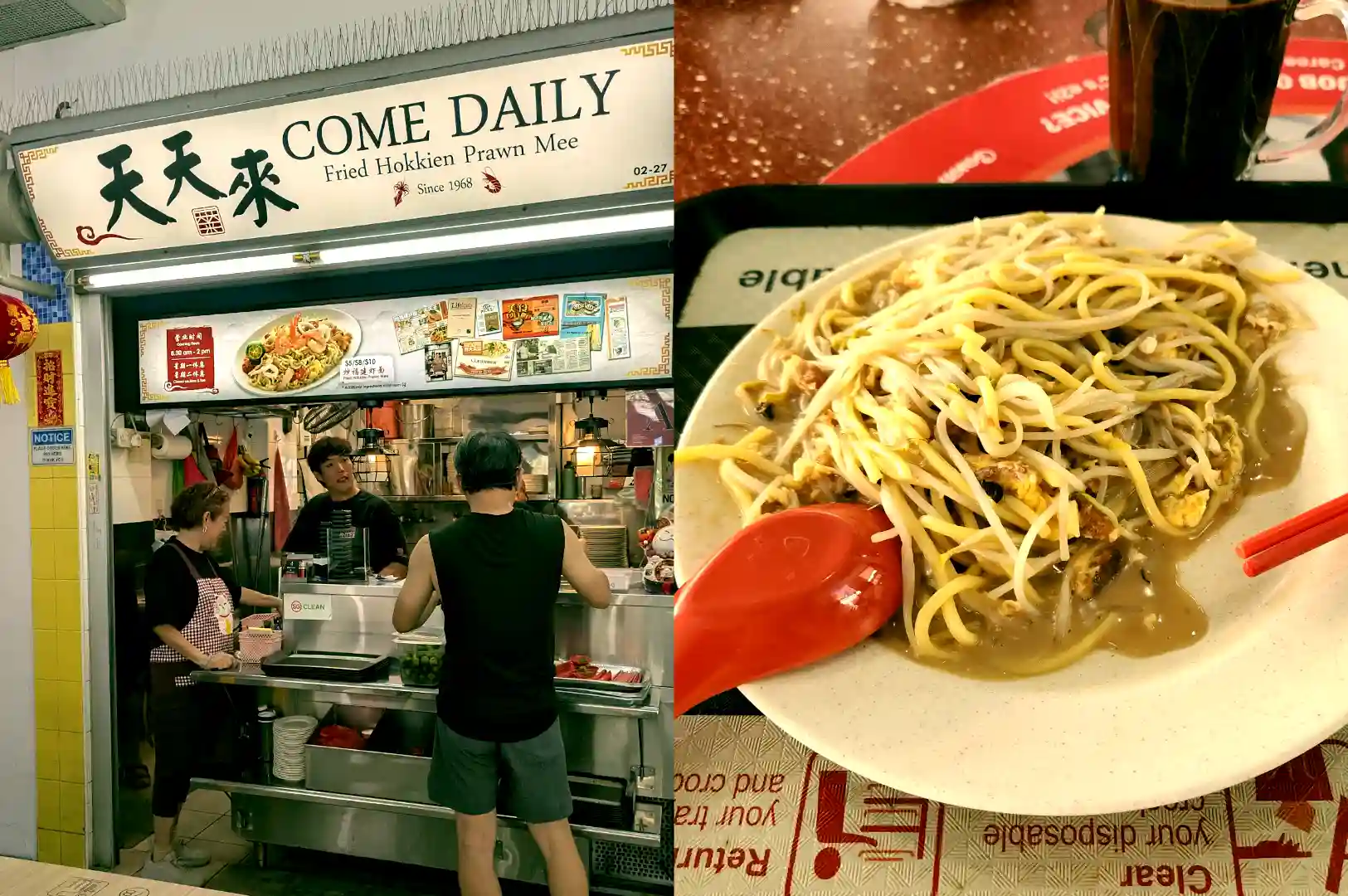
Crispy pork lard can make a surprising difference to fried noodles, and at Come Daily Fried Hokkien Prawn Mee, it’s an important part of the dish. Also known as Tian Tian Lai, this Michelin-selected hawker stall in Toa Payoh specialises in fried Hokkien prawn mee with yellow noodles, bee hoon and squid.
The noodles are prepared in a wetter style, allowing the seafood broth to coat the strands while the fried pork lard adds a salty crunch. It’s an appealing combination of soft noodles, tender squid and crispy toppings, especially for those who enjoy a richer version of this Singaporean favourite.
Where Opinions Matter
I have a particular weakness for crispy pork lard, although I think a good plate of Hokkien mee needs more than generous toppings to impress. The balance between the yellow noodles and thin bee hoon matters just as much. I prefer the noodles slightly firm, with enough broth to bring everything together without making them overly soft.
Come Daily’s wetter consistency might be a little much for those who enjoy drier fried noodles. Personally, I’d add a squeeze of lime and some sambal chilli to balance the richness. I’d also be tempted to ask for extra pork lard, though that’s probably my preference for a little crunch speaking.
When and Where
- Where: 127 Lorong 1 Toa Payoh, #02-27, Toa Payoh West Market & Food Centre, Singapore 310127
- When to go: Wednesday to Sunday, 8:30am to 2pm. Closed Monday and Tuesday. Arriving before the lunch crowd is advisable.
6. Hokkien Man Hokkien Mee (Kim Keat Palm, Toa Payoh)
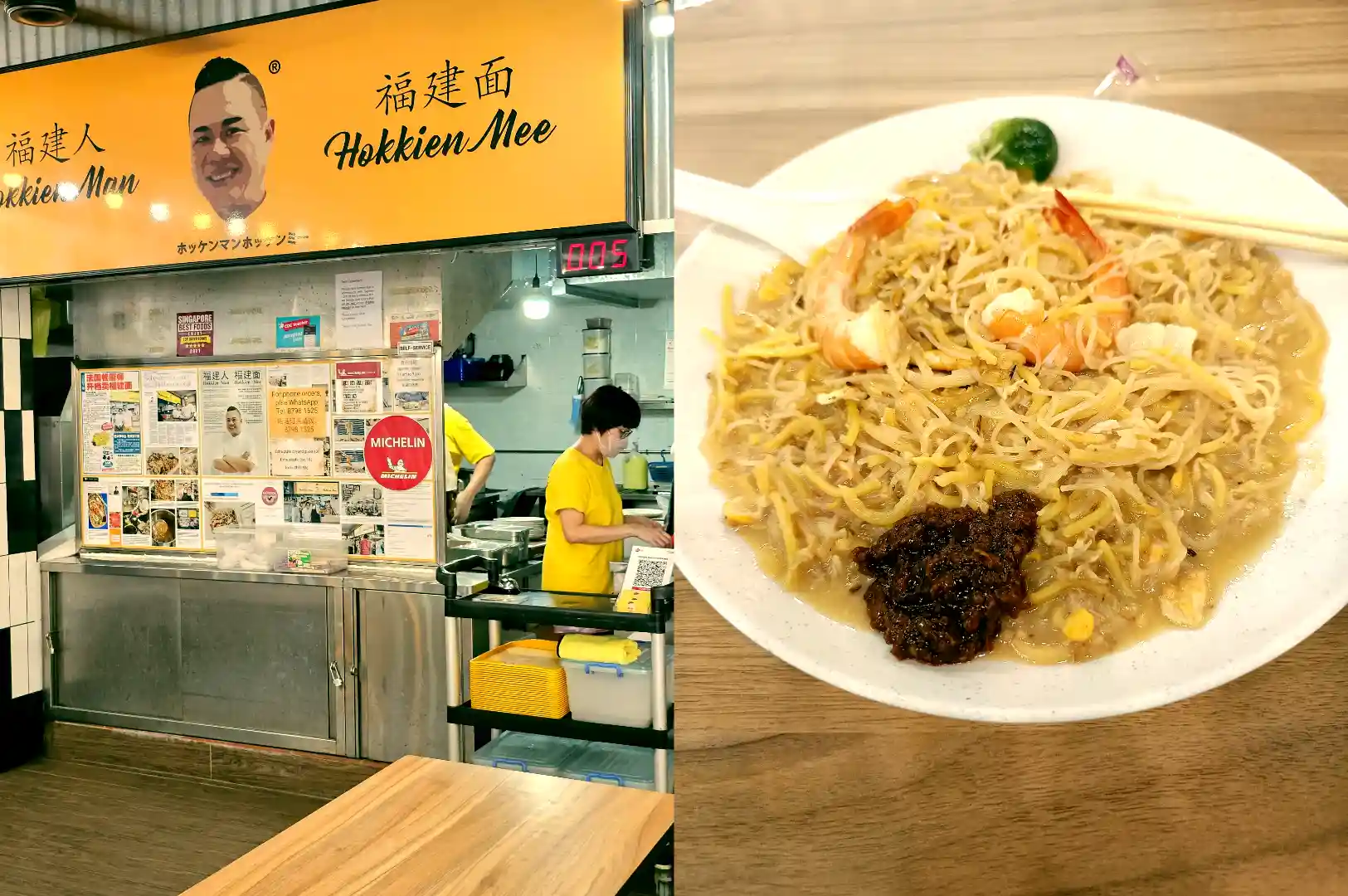
A good prawn broth can change the character of fried Hokkien noodles, and Hokkien Man Hokkien Mee makes it a defining feature. Located at Kim Keat Palm in Toa Payoh, this Michelin-selected hawker stall cooks its noodles in a garlicky stock made from prawn heads, giving the dish a rich seafood flavour.
Alongside the usual prawns and squid, Hokkien Man offers additional toppings such as egg and abalone for an extra charge. Its wetter consistency leaves the noodles coated in savoury broth, making it an interesting option for those who enjoy their Hokkien mee with more sauce.
Where Opinions Matter
I’m particularly interested in how garlic changes the flavour of prawn-based dishes. A little garlic can bring out the sweetness of seafood, but too much can easily overpower it. With Hokkien Man’s garlicky broth, I’d be inclined to try the standard portion first before considering the premium toppings.
Personally, I also prefer my thin bee hoon to retain a little firmness rather than become completely soft from the broth. That’s where wetter Hokkien mee can be tricky, especially when the liquid hasn’t been completely absorbed. As for the abalone, I’m not entirely convinced it’s necessary when the prawn-head stock is already the attraction.
When and Where
- Where: Block 19, Lorong 7 Toa Payoh, #01-264, Singapore 310019
- When to go: Monday, Tuesday, and Thursday to Sunday. They’re close Wednesday. Oh, and their opening hours vary between 10:30am–2pm and 11am–3pm, so check the latest schedule before visiting.
The Ingredients That Make a Difference
I’ve always found that the smallest ingredients can tell you quite a bit about how a hawker approaches Hokkien mee. Some are immediately noticeable, while others contribute to the flavour without ever appearing on the finished plate.
- Pork belly: Traditionally used in Singapore Hokkien mee, adding richness and a savoury meat flavour.
- Ikan bilis: Some recipes use these dried anchovies to give the stock additional depth alongside prawn shells and pork bones.
- Dried shrimps: An optional ingredient in certain preparations, contributing a more concentrated seafood flavour.
- Beansprouts: Add a little crunch, particularly when the noodles are softer and wetter.
- Fish cake: Appears in certain recipes, offering a springy texture alongside the prawns and squid.
- White pepper: Can contribute a mild peppery note to the stock without relying entirely on chilli for seasoning.
- Spring onion: Sometimes used as a garnish, although Chinese chives are more commonly associated with traditional Hokkien mee.
I’ve always thought the stock deserves more attention than the toppings. It’s the same reason I enjoy a good fish soup in Singapore, where even a simple combination of seafood and broth can reveal quite a bit about the cook’s technique.
So, How Do You Like Your Hokkien Mee?
Singapore really has no shortage of local dishes to argue over. Some swear by their favourite chicken rice stall, others have strong opinions to something as simple as kaya toast and even start a debate about how much butter is too much. Hokkien mee is no different, especially when it comes to the question of wet versus dry.
Personally, I’ve always thought a good plate depends on how well the noodles absorb the stock without losing their texture. Give me fresh prawns, a little wok hei and some sambal chilli, and I’d be happy to have it for dinner any day.
The debate over Singapore’s best Hokkien mee probably won’t end anytime soon, and I think that’s part of the fun. For those interested in exploring more Singaporean dishes, Fortune Centre’s eateries are ones to check out, including one serving its own take on Hokkien mee.
