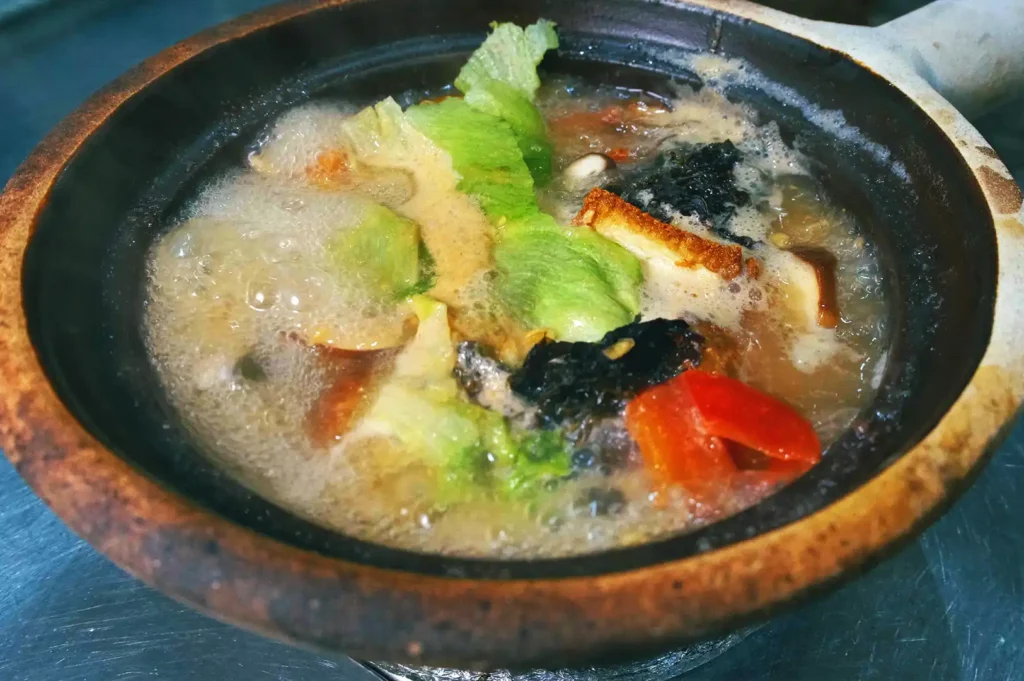
There are plenty of seafood restaurants in Singapore where the story begins in the kitchen. A chef develops a recipe, a dish becomes popular, and eventually the restaurant builds its identity around it. At Hup Lok, the story begins earlier, with a family that has spent three generations buying, selling and understanding fish.
Before there was a dining room at 725 Havelock Road, the founder’s father was already working with seafood. He sold fish around the River Valley area and eventually moved into the seafood trade at Jurong Fishery Port. The family still buys fish at dawn today, which gives Hup Lok an interesting distinction: its relationship with seafood starts at the buying stage, not when the ingredient reaches the kitchen.
The Meal Starts Before the Kitchen
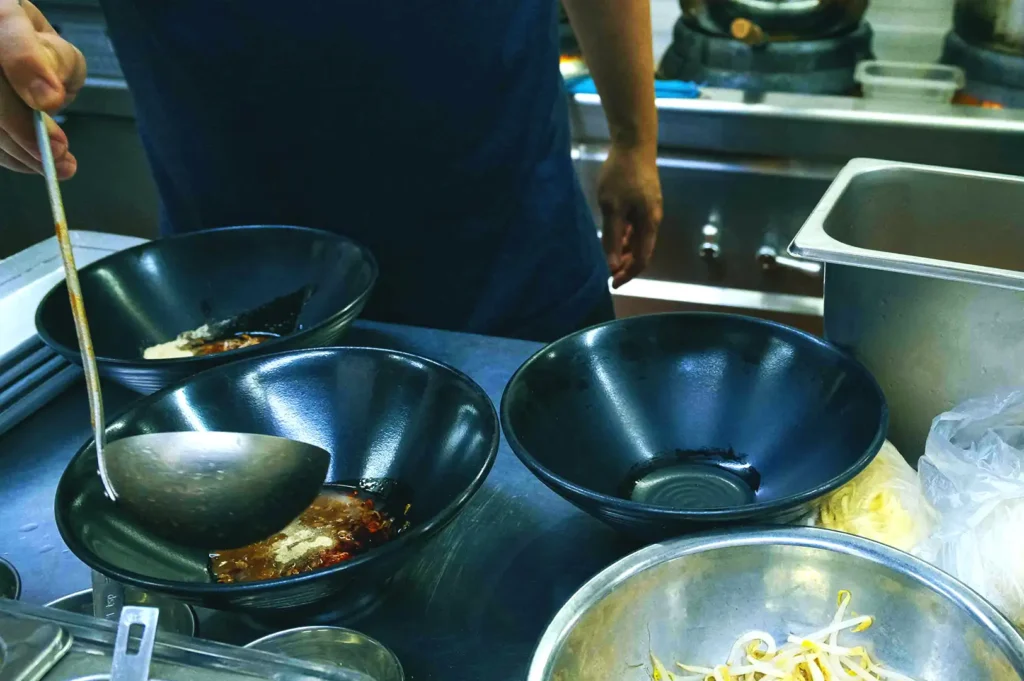
I have always thought that seafood restaurants reveal themselves most clearly through their ingredients. A sauce can be adjusted and a recipe can be rewritten, but fish is less forgiving; what reaches the plate depends heavily on what was selected, when it was bought and how it was handled. At Hup Lok, that understanding comes from a family history in the trade rather than from a restaurant concept developed on paper.
The founder describes the family’s approach to buying fish in practical terms, selecting seafood by eye, by hand and by name. It is a detail that sounds simple until you consider how much knowledge sits behind it. Knowing which fish to buy, which condition it should be in and what it is suited for becomes part of the cooking long before a chef picks up a knife.
That is what makes Hup Lok’s sourcing story worth paying attention to. The restaurant is not simply asking what it can cook with the ingredients available; it starts by understanding the ingredients themselves. The kitchen then becomes the next stage of a process that began before sunrise.
Grandpa’s Pomfret Soup Puts the Story in a Bowl
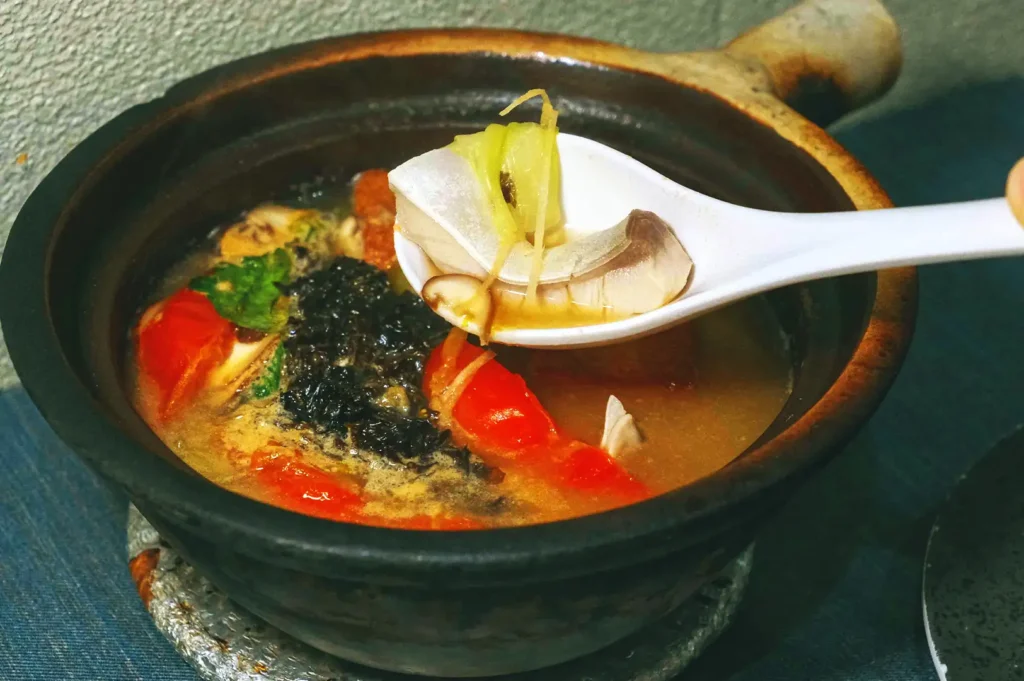
The clearest expression of that philosophy is Grandpa’s Pomfret Soup, a dish that connects Hup Lok’s present directly to the founder’s family history. The name refers to his father, making the restaurant’s signature bowl more than a menu item with a sentimental title. It places the family’s relationship with fish directly on the table.
The soup is white because the bones give everything. Its body comes from fish bones and collagen rather than milk, with the broth built using batang bones and tee poh to create its depth and texture. It is a useful example of how Hup Lok approaches familiar food: the technique is substantial, but the finished dish remains straightforward.
A whole pomfret sits at the centre of the bowl, giving the fish nowhere to hide behind elaborate presentation. The broth has enough character to stand on its own, while the pomfret provides the reason for drinking it in the first place. For a restaurant whose identity begins with knowing seafood, it feels fitting that its most recognisable dish asks you to pay attention to the fish itself.
Familiar Food With Serious Work Behind It
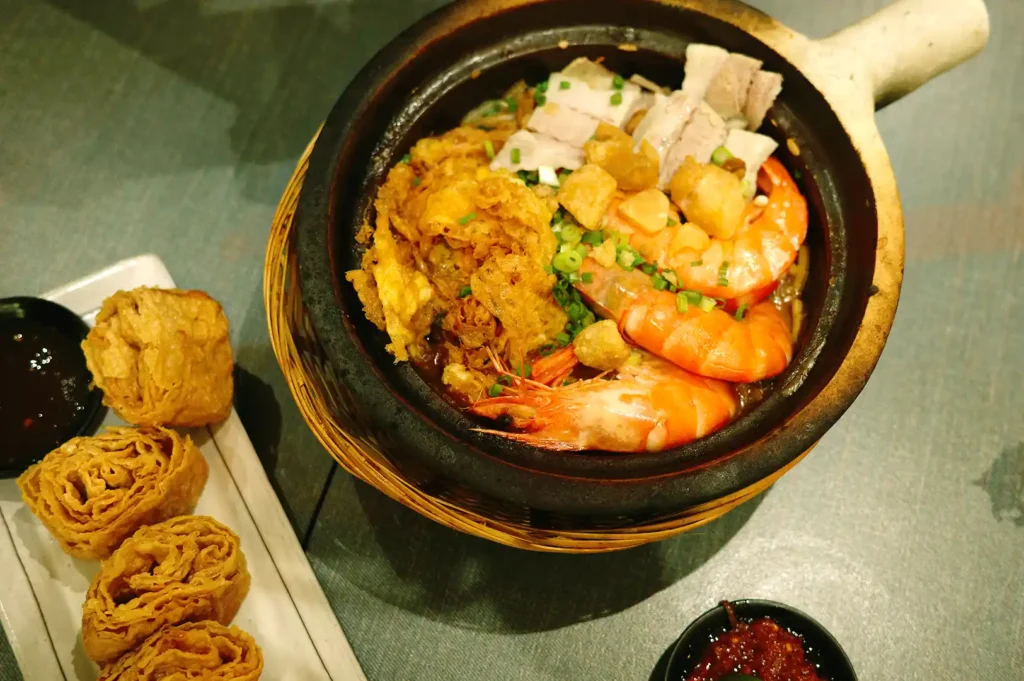
The rest of the menu follows the same philosophy, even when the dishes themselves feel immediately familiar. Signature Prawn Noodles puts seafood into one of Singapore’s most recognisable noodle formats, while Claypot Hokkien Mee takes another well-known local favourite and gives it the restaurant’s seafood focus. Alaskan King Crab Bee Hoon and Seafood Pao Fan continue the same idea in richer forms, showing how the restaurant can move between everyday comfort and more substantial seafood dishes.
What I find appealing is that Hup Lok does not seem interested in making familiar food complicated for the sake of appearing sophisticated. There is no need to disguise the ingredients or turn every dish into a technical exercise. Instead, the work happens underneath the surface, in the selection of seafood, the preparation of broths and the decisions that determine what ultimately reaches the table.
That approach also makes the restaurant easier to understand. You can come for a bowl of pomfret soup because you already know what fish soup means, or order noodles because the format feels familiar. The difference is that Hup Lok brings generations of seafood knowledge into those dishes without asking the diner to decode them.
The Long Way Back to Seafood
The founder’s own journey makes this approach more interesting. Before Hup Lok, he spent years in consulting and entrepreneurship before entering the F&B industry and eventually opening a contemporary seafood restaurant in Singapore’s CBD. That experience exposed him to a different side of running a restaurant and gave him lessons that would eventually shape the direction of Hup Lok.
The local spot for fish soup in Singapore that came after was not simply an attempt to make the previous concept bigger or more elaborate. Hup Lok moved closer to the food that had surrounded the founder long before he entered the restaurant business: fish, soup, noodles and rice. In that sense, the restaurant feels less like the beginning of a seafood journey and more like a return to one.
His professional experience explains how he approaches running a business, but his family explains why that business is built around fish. That distinction gives Hup Lok a more grounded story than the usual narrative of someone discovering an ingredient and deciding to build a restaurant around it.
Why Simple Food Can Be Difficult
A bowl of fish soup leaves very little room for a kitchen to hide. There is no elaborate plating to distract from the broth, and no long tasting menu to make a diner wait for the important part. When the food is familiar, the details become easier to notice: whether the fish tastes right, whether the broth has enough body and whether the seafood still feels like the centre of the dish.
That is where the sourcing story becomes important. Hup Lok’s knowledge of seafood is not simply an interesting fact to mention in an introduction; it provides context for why the restaurant places so much emphasis on buying and handling fish. The work that happens before cooking is ultimately reflected in what the kitchen has to work with.
It also explains why the restaurant can afford to keep its menu relatively uncomplicated. When you know the ingredient well, you do not necessarily need to bury it beneath layers of technique. Sometimes the more revealing approach is to put the fish in a bowl, build a broth around it and let the ingredient do the talking.
A Restaurant Built Around What Comes Before
After looking at Hup Lok through its sourcing, the most interesting thing about the restaurant is not simply that it has three generations of seafood history. It is that this history continues to influence what happens today, from buying fish at dawn to preparing broth and deciding which familiar dishes belong on the menu. The heritage is not something added to the restaurant after the fact; it is part of how the restaurant operates.
That makes Grandpa’s Pomfret Soup particularly effective as the restaurant’s signature. A whole fish, a broth built from bones and a name that reaches back to the founder’s father bring the different parts of the story together in one bowl. Around it, the noodles and rice dishes show that the same thinking can extend beyond soup without losing its connection to seafood.
Hup Lok is still a young restaurant, but the knowledge behind its food is much older. Its story begins not with a chef deciding what to cook, but with a family that already knew what good fish looked like before it reached the kitchen. At Hup Lok, the meal may begin at the table, but the story of the fish starts much earlier.
For more closer looks on your favourite comfort restaurants, visit Singapore Best Restaurants!
