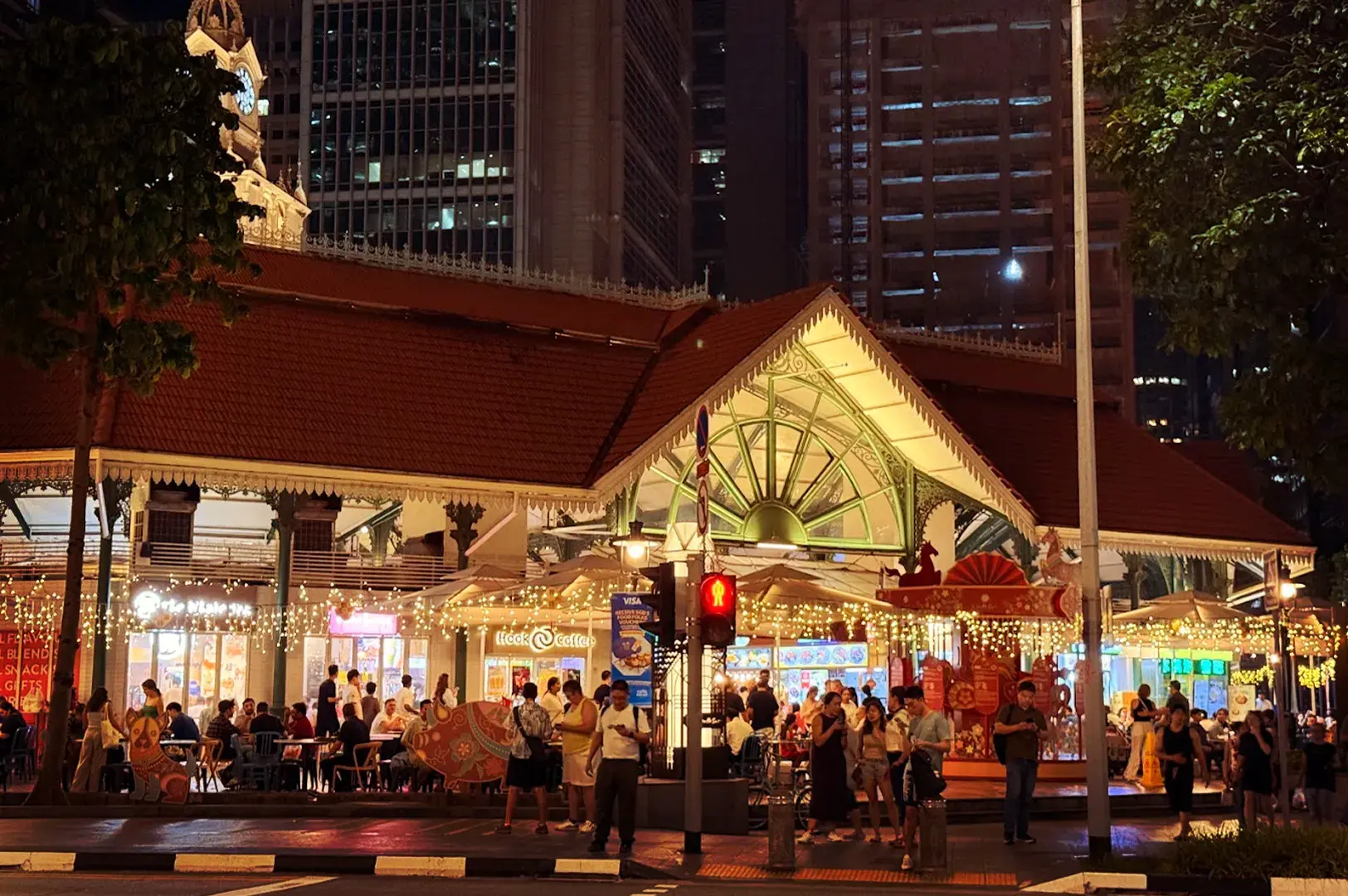
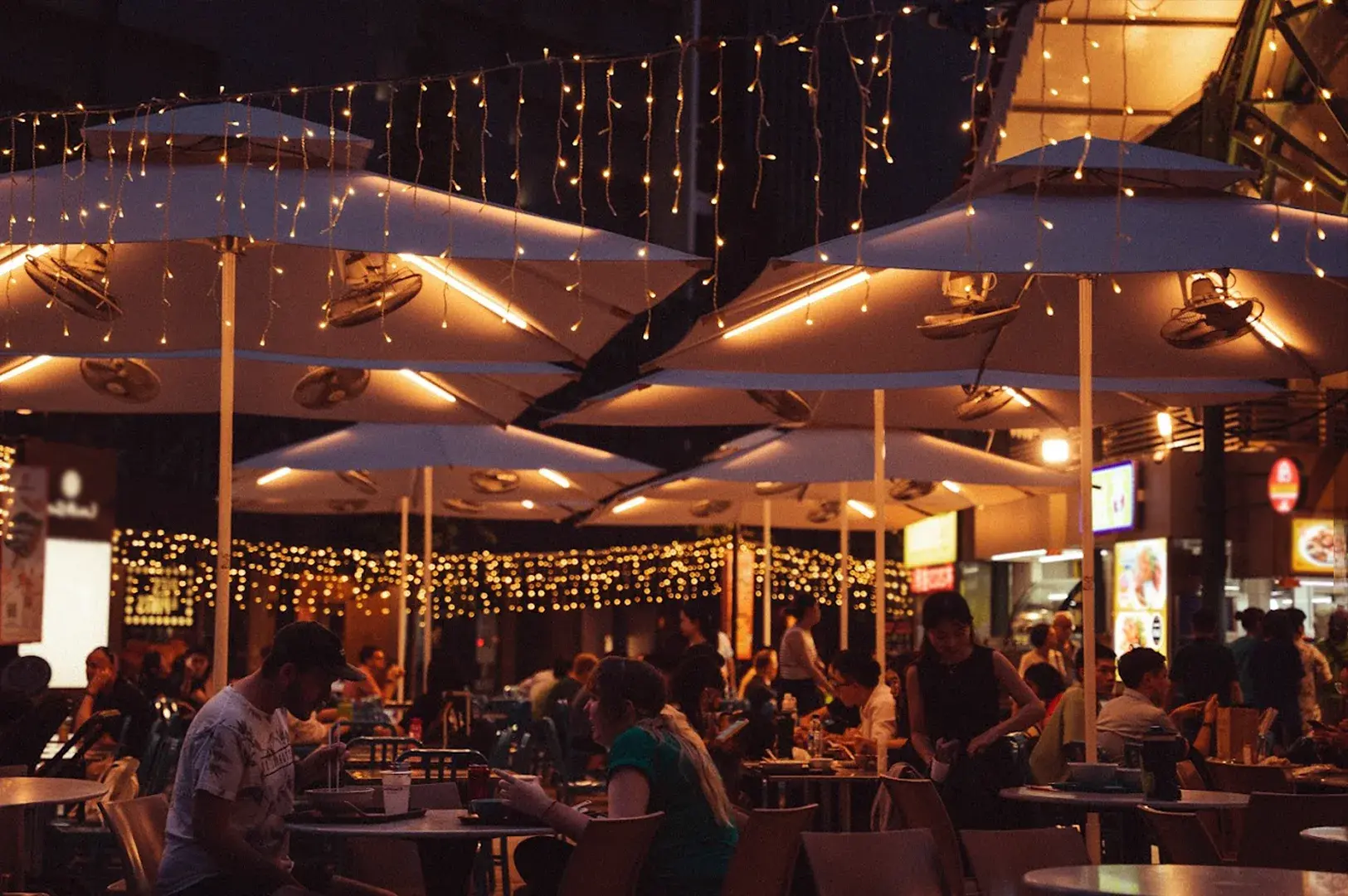
There is a specific hour when the financial district begins to exhale. The towers near Raffles Quay still glow, but the rush thins out, and the air carries something new. Charcoal smoke drifts low over the pavement, the satay stalls sizzle to life, and people gather around shared tables beneath the octagonal shape of the old market roof. This is the moment Lau Pa Sat stops being a daytime food court or hawker centre and becomes a ritual of city dining.
This is not a stall-by-stall guide, nor a ranking of the best satay. It is a closer look at why satay in Singapore feels unforgettable when eaten outdoors, in the heart of the city. What makes lau pa satay remarkable is not a single skewer, but the way food, place, and people fold into a single evening. From chicken satay and pork satay to beef satay, mutton satay, and even prawns skewered over charcoal, the experience is elevated by the setting and rhythm of the street.
When Lau Pa Sat Becomes a Night-Time Dining Scene
By day, Lau Pa Sat behaves like any busy food centre. People move quickly, grab a plate, and head back to the office. The grand octagonal shape and clock tower fade into the background, while subtle hints of the market built in early colonial Singapore remain, recognized today as a national monument. The practicality of a food court or hawker centre can make it easy to overlook, but it carries a lineage from places like the Satay Club, Festival Market, Pasir Panjang Food Centre, Toa Payoh Lor, and Telok Ayer Market.
In the evening, Boon Tat Street closes to traffic, and satay stalls roll their grills out onto the open road. The contrast is striking: the old market, surrounded by glass towers, the hum of 18 Raffles Quay, and the glow of Raffles Hotel. Vendors like Chai Ho Satay, Yong Seng Satay, Ah Pui Satay, Fang Yuan Satay, and Haron Satay prepare skewered meat for the crowds, creating a sensory symphony of smoke, heat, and aroma.
Satay Stalls as a Door to History and Modernization
Sitting under the iron framework while the skyline lights up, the layering of old and new becomes apparent. Subtle hints of early colonial Singapore merge with contemporary city life, reminding diners that Lau Pa Sat is more than just a meal; it is a meeting point of heritage, food, and community. According to the Straits Times, Lau Pa Sat remains one of the few places in the CBD where diners can enjoy authentic satay at an affordable price, while still taking in the history embedded in its walls.
Why Satay Feels Different Here
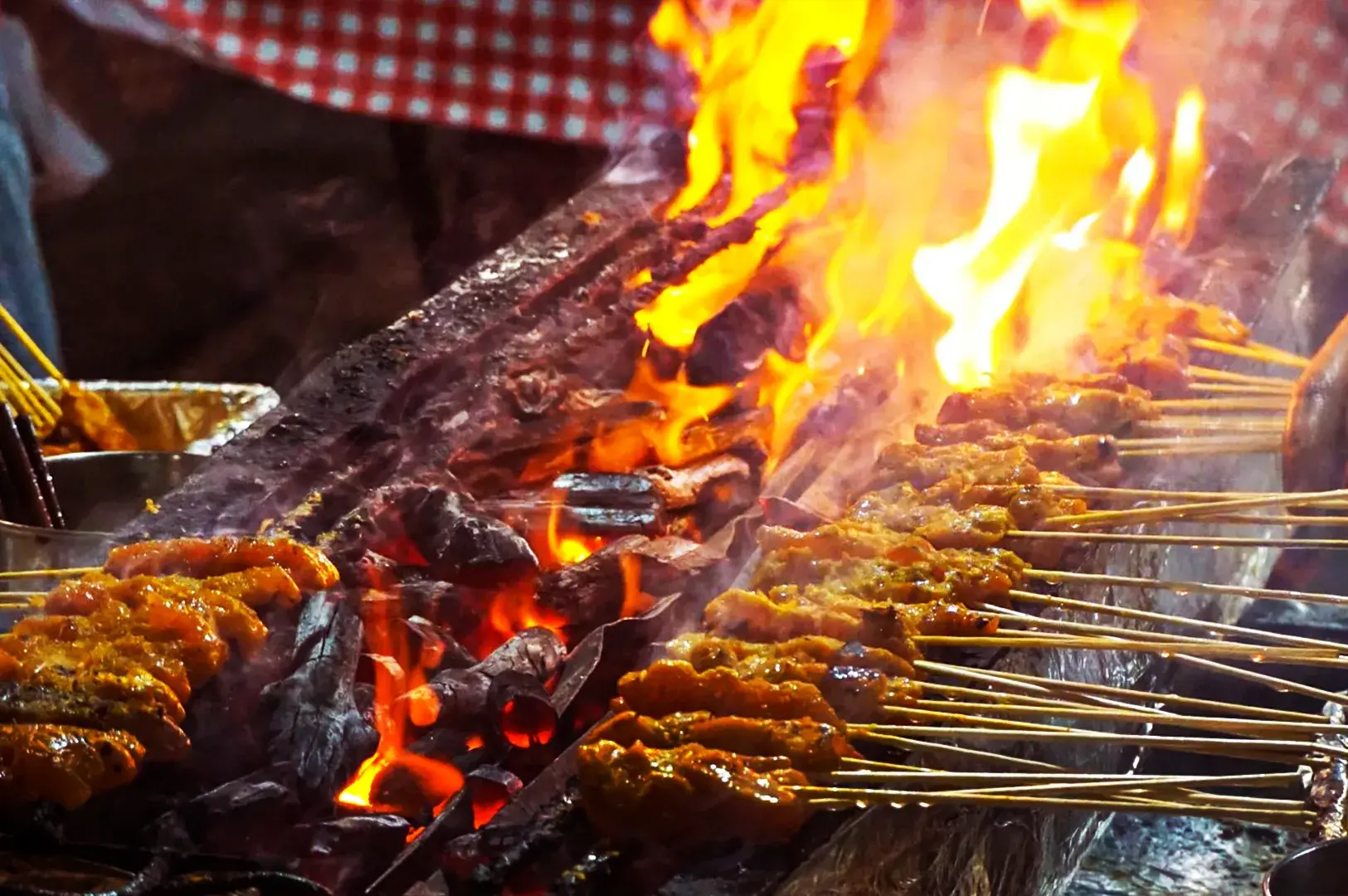
Satay is deceptively simple: sticks of marinated meat, skewered and grilled over charcoal until edges are well grilled and slightly crisp. The marinade often includes lemongrass, cumin, coriander, and other spices, producing a savoury, sometimes sweet flavour that hits every bite. Chicken satay is delicate, pork satay rich, beef satay hearty, and mutton satay deeply aromatic. Each generous portion is served with ketupat, cucumber, raw onions, and occasionally pineapple puree.
What lifts Lau Pa Sat satay above the usual is how it is eaten. You dip each bite into thick, chunky peanut sauce or drizzle satay sauce over the skewers. The ritual: the smoke rising, the shared plates, slightly greasy fingers, turns grilled meat into a communal experience. The best satay here is as much about atmosphere as flavour. Whether it’s chicken, beef, pork, mutton, or prawns, the combination of marinated sticks, well-grilled edges, and peanut-laden sauce is hard to replicate anywhere else in Singapore.
The Best Satay Street Experience
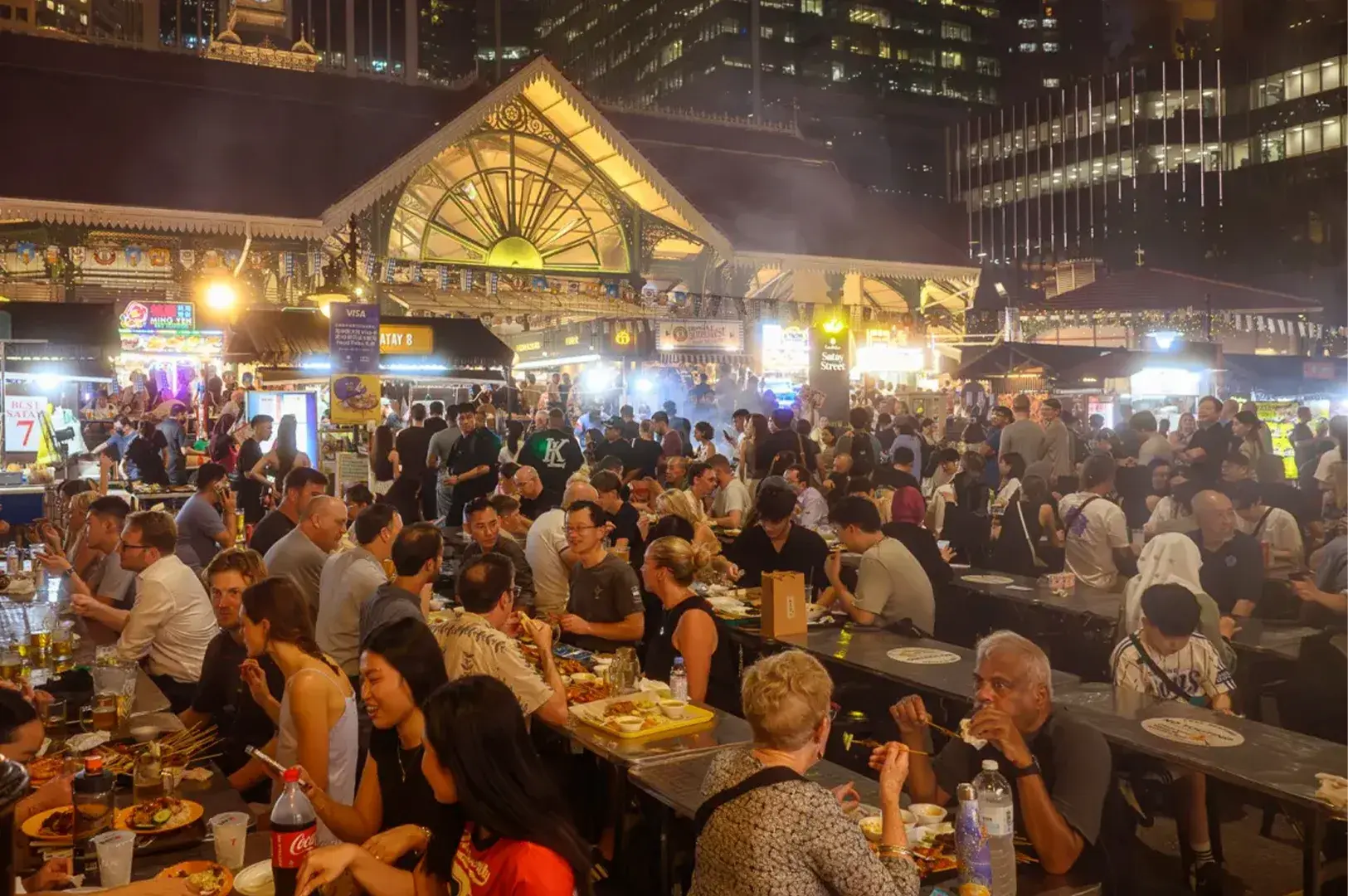
Satay Street Singapore is more than a location; it’s a living dining room. Plastic stools line Boon Tat Street, the satay stalls edge the pavement, and smoke hangs low over diners. The open-air environment, the mix of locals and visitors, and the casual rhythm of ordering create an experience that feels both tourist-friendly and locally familiar.
Even as people discuss famous vendors, it is the collective energy of the street, not any single stall, that defines the evening. The flavours of marinated chicken, beef, pork, and mutton combine with smoky charcoal and fragrant peanut sauce. Pineapple puree, ketupat, cucumbers, and onions add subtle textures, completing the sensory landscape.
Note: Paying attention to the opening hours is key, as the satay street truly comes alive only in the evening.
When Smoke, Skewers, and Skyline Meet
After a night here, it is rarely one bite that lingers, but the combination of charcoal, well-grilled meat, thick peanut sauce, and the CBD skyline above the tables. Lau Pa Sat turns a simple satay dinner into a full Singapore experience.
It is neither the quietest nor the most refined dining spot, but its power lies in how it brings people together (friends, locals, visitors) over generous portions of skewered meat, spicy and savoury, under the glow of 18 Raffles Quay. Come hungry, come with company, and let Lau Pa Sat remind you why food here is about far more than just the taste.
For more navigation-focused culinary guides and features, check Singapore East Coast Eats: From Marine Parade to Bedok’s Best Restaurants!
