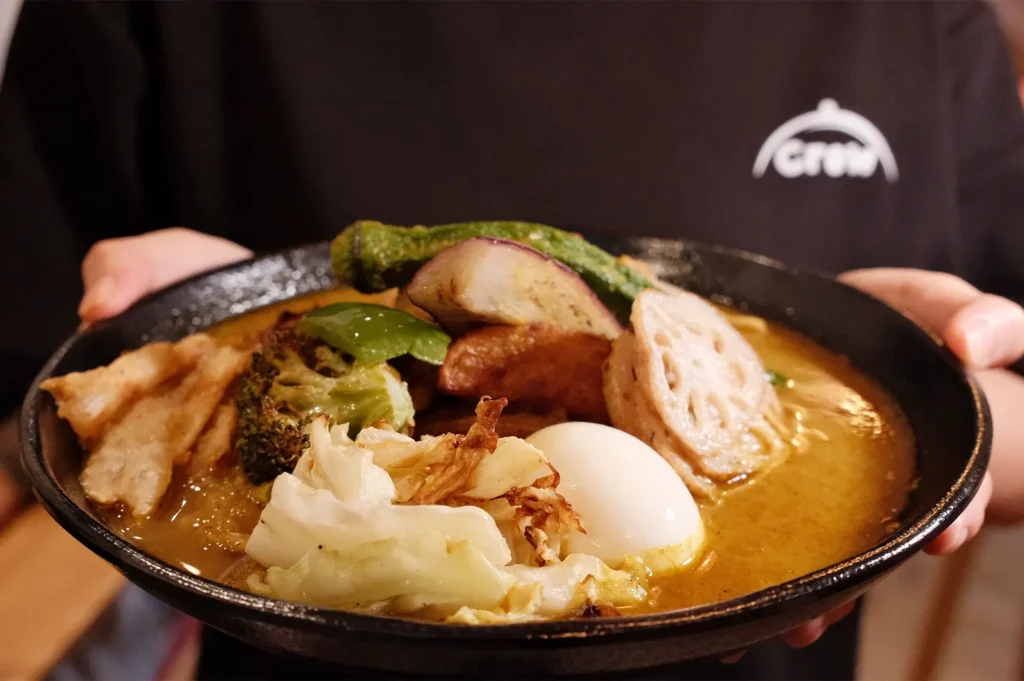
The bowl came to rest in front of me and for a moment, I just looked at it.
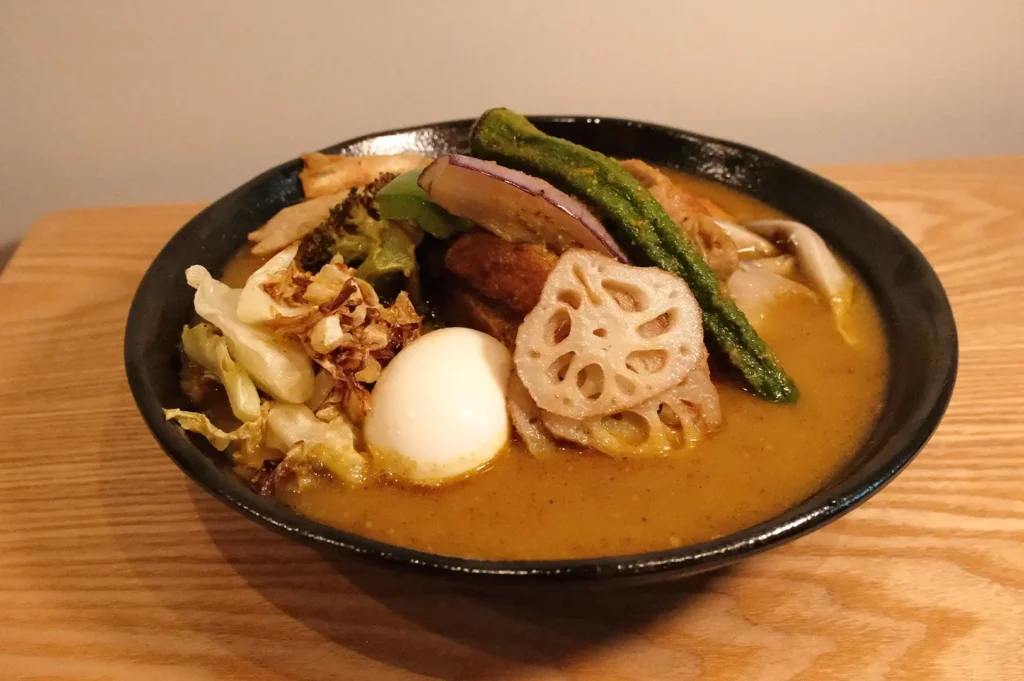
The rice sat apart, in its own small mound. The rice sat apart, in its own small mound. A large chicken drumstick rested in the broth, unhidden, and the vegetables kept their shape and colour instead of disappearing under a thick gravy. Nothing was buried. Everything was on show.
I have eaten enough curry to carry a quiet expectation with me. Curry, in my head, coats. It clings. It leans heavy on the spoon. So when a comforting bowl of Hokkaido soup curry arrives looking closer to soup than to sauce, a small question follows you to the first spoonful. Can something this light satisfy the way the thick stuff does?
Craft Is Easier to Recognise Than Preference
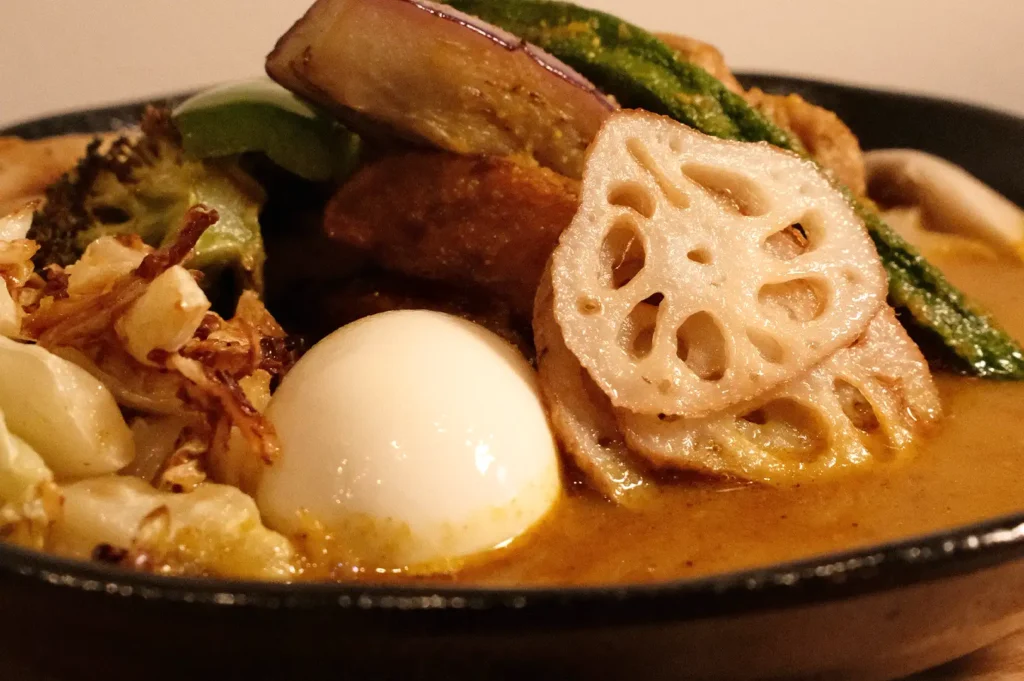
The broth is where the work lives. Chicken bones are boiled for more than six hours before Chef Masa folds in his own spice blend, one he keeps to himself. You taste the patience before you taste anything else.
There is a savoury chicken foundation underneath, steady and clean. Above it, warmth. The aroma reaches you before the spoon does, and the spice settles rather than shouts. It is fluid, soup-like, yet it never once tasted thin or watered down.
Originating in Sapporo, Hokkaido soup curry follows a different tradition from the thick, roux-based Japanese curry most of us know. The broth is meant to be enjoyed by the spoonful, with vegetables and protein adding substance rather than relying on a heavy sauce.
Soup Curry by Ki-setsu is a dedicated traditional Hokkaido-style soup curry concept at Fortune Centre. I could recognise the care in that broth easily enough. Whether it was the curry I most wanted was a separate question, and an honest one.
The Part I Had to Be Honest About
Here is what I kept turning over. I still love the physical richness of a conventional Japanese curry.
There is a comfort in that thicker texture, the way roux-based sauce clings to each grain of rice and pools at the edge of the plate. It is denser. It coats the spoon and stays. Some days that weight is exactly what I am after, and this broth, for all its depth, does not give you that same sensation.
During parts of the tasting, I felt that pull. I missed a little of the heaviness. But the more I sat with it, the clearer it became that these are two different appetites, not a better one and a worse one. Anyone who has explored Japanese curry in Singapore knows the thick, familiar comfort of roux. This is simply a different tradition asking for a different kind of hunger.
Then the Rest of the Bowl Starts to Matter
I had been judging the broth alone and that was my mistake. Soup curry earns its satisfaction as a whole.
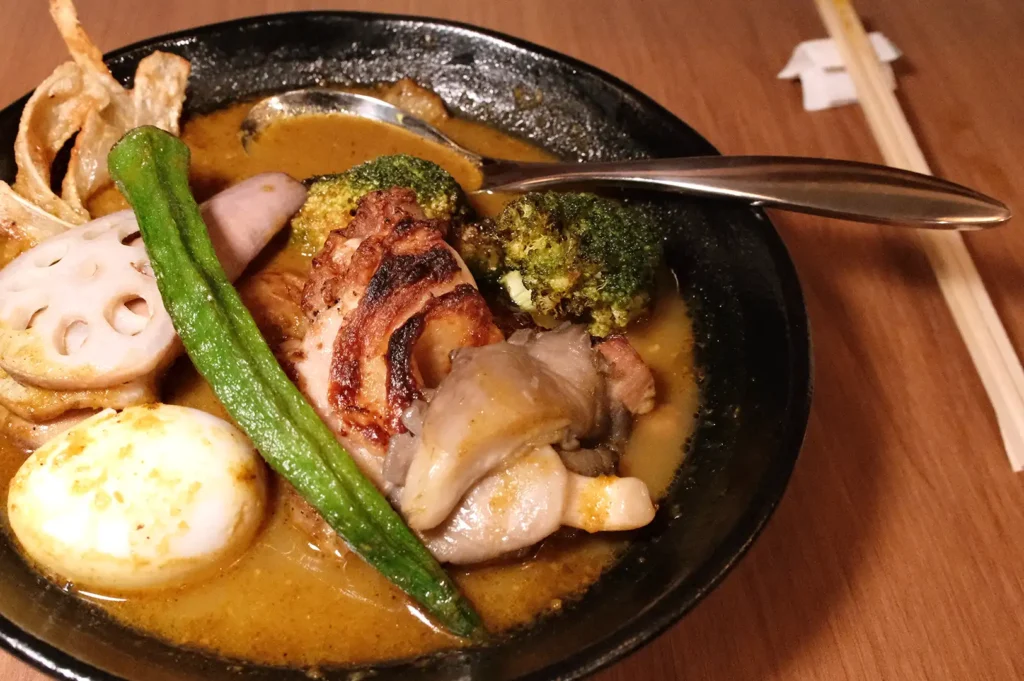
The Soup Curry Chicken Drumstick Bowl ($14.80) gives the meal real substance. The large drumstick is simmered for hours until the meat pulls easily from the bone. I pulled a piece away, spooned some rice, then chased it with the broth, and the sequence made more sense than any single element had on its own.
There is no strict way to eat it, either. The restaurant offers steamed white rice or multigrain brown rice, served separately and free-flow. You can drizzle the broth over your rice, spoon some rice into the soup, or dip a spoonful straight into the curry. I found myself alternating between everything. The rice became the solid thing between mouthfuls of soup.
The vegetables are prepared using su-age, a Japanese technique where they are fried directly in oil without batter. Eggplant softens enough to absorb the curry broth, while lotus root keeps a pleasant bite. They hold their individual textures instead of becoming one indistinguishable mouthful.
The vegetables are flash-fried rather than deep-fried, sourced from both local and overseas produce, and they hold their texture. After a richer bite of chicken, one of them reset my palate and sent me back to the broth wanting more. The bowl grew on me not through any one flavour, but through the rhythm of moving between them.
With vegetables in mind, there is also a Soup Curry Vegetable Bowl ($14.80), with a wider selection of seasonal vegetables for those who prefer something without meat. Both bowls come with half a ramen egg and rice.
Not Every Comfort Food Has to Comfort the Same Way
By the end, I stopped trying to rank the two.
Thick Japanese curry offers density, coating richness, familiarity. Hokkaido soup curry offers warmth, aroma, spice, and changing textures, a substantial meal that never leans on a heavy sauce. They answer different questions.
There are days I would reach for the thick bowl without a second thought. And now there are days I would choose this one. That felt like an honest place to land.
Respecting a Bowl Without Replacing Another
This soup curry did not make me stop wanting thick Japanese curry when that is the craving. It did convince me that the Hokkaido style deserves its own place at the table beside it.
My first visit was during an August tasting preview. I returned when Soup Curry by Ki-setsu officially opened on October 8th, at Fortune Centre, 190 Middle Road, #04-13. Coming back felt different. I was no longer wondering whether a lighter curry could satisfy me. I had stopped expecting it to be something it wasn’t.
Both soup curry bowls are currently priced at $14.80, with free-flow rice included. For the latest menu and restaurant updates, you can visit their Instagram.
Good food does not have to unseat an old preference to earn a place beside it.
